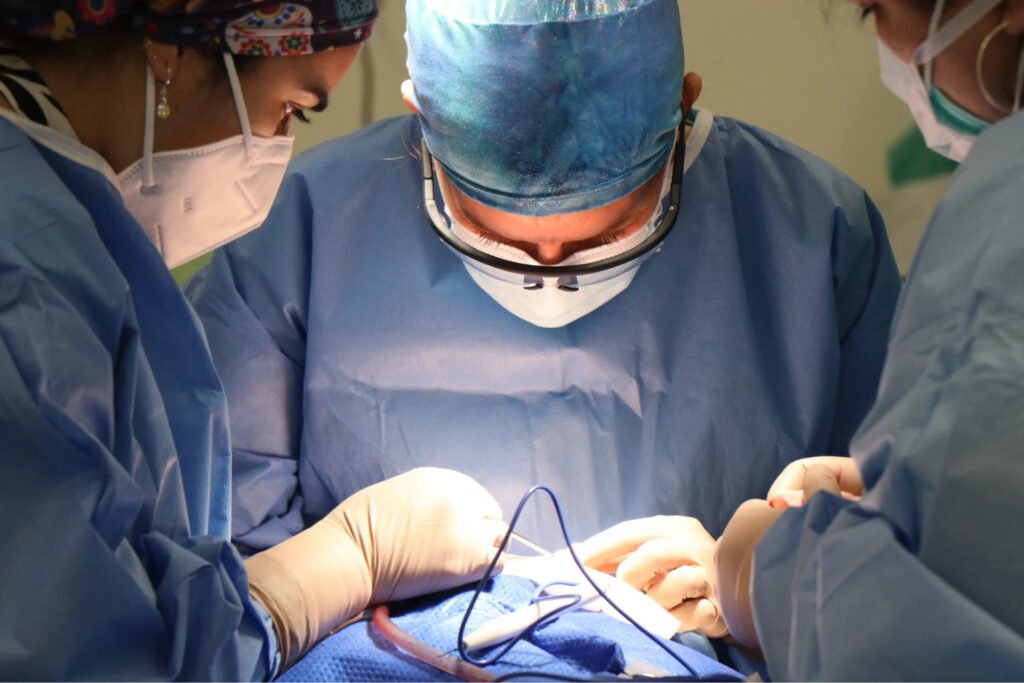
No. Not every head and neck cancer requires surgery. Treatment depends on the type, location and stage of the cancer, whether it can be safely removed, and other factors identified through biopsy, imaging and specialist assessment.
Surgery is an important treatment for many head and neck cancers, but it is only one of several treatment options. Depending on the individual cancer, treatment may involve surgery, radiation therapy, chemotherapy, targeted therapy, immunotherapy, or a combination of these approaches.
Every cancer is different, and so is every patient. Doctors consider not only how to control the cancer, but also how treatment may affect important functions such as speaking, swallowing, breathing, eating and appearance.
So, if you or someone you know has been diagnosed with head and neck cancer, a cancer diagnosis does not automatically mean that surgery is the only option.
Why Doesn’t Every Head & Neck Cancer Need Surgery?
Head and neck cancer is not a single disease. It can develop in different areas, behave differently and respond differently to treatment.
The best treatment depends on several factors, including where the cancer started, how advanced it is and whether it can be safely removed.
For some patients, surgery may be the main treatment. For others, radiation therapy, chemotherapy or another treatment may be more appropriate. Some patients may need more than one type of treatment.
The goal is not simply to remove a tumour. Doctors also consider how to achieve effective cancer control while preserving important functions whenever possible.
What Determines Whether Surgery Is Needed?
There is no single treatment that works for every head and neck cancer. Before recommending surgery, doctors consider several factors.
Where Is the Cancer Located?
Head and neck cancer can develop in different parts of the head and neck, including:
- Mouth and tongue
- Lips and gums
- Tonsils and throat
- Voice box
- Nose and sinuses
- Salivary glands
- Other areas of the head and neck
The location of the tumour can significantly influence the treatment approach.
For example, a small tumour in the mouth may be treated differently from a cancer that begins in the nasopharynx or voice box.
What Is the Stage of the Cancer?
The stage describes how large the cancer is and whether it has spread to nearby lymph nodes or other parts of the body.
Some early-stage cancers may be treated with one main treatment. More advanced cancers may require a combination of treatments.
This is why knowing the stage is an important part of deciding whether surgery is appropriate.
Can the Cancer Be Safely Removed?
Doctors also need to determine whether the tumour can be removed completely without causing unacceptable damage to important structures.
This is often described as whether the tumour is resectable, meaning that it can be removed surgically.
The relationship between the tumour and nearby nerves, blood vessels, muscles, bones and other structures can influence this decision.
The question is not simply whether a tumour can be removed. Doctors also need to consider what the patient may lose in terms of important functions if surgery is performed.
What Does the Biopsy Show?
A biopsy involves taking a small sample of tissue so that it can be examined under a microscope.
A biopsy helps confirm whether cancer is present and provides important information about the type of cancer.
In some cancers, additional testing may also provide information that helps guide treatment. For example, HPV-related testing may be relevant in selected head and neck cancers.
What Is the Patient’s Overall Health?
Treatment planning considers the patient as a whole, not only the cancer.
Doctors may consider:
- Age
- General fitness
- Existing medical conditions
- Nutrition
- Previous treatments
- Ability to tolerate surgery, radiation or other treatments
Two people with apparently similar cancers may therefore receive different treatment recommendations.
How Could Treatment Affect Speech, Swallowing and Breathing?
The head and neck contain many structures involved in important everyday functions.
Depending on where the cancer is located, treatment may affect:
- Speech
- Swallowing
- Breathing
- Eating
- Appearance
This is one reason why the treatment decision needs to consider both cancer control and quality of life.
Can Head & Neck Cancer Be Treated Without Surgery?
Yes, in some cases.
Radiation therapy, chemotherapy and other cancer treatments may be used instead of surgery for certain cancers. They may also be combined with surgery as part of a broader treatment plan.
Whether a patient can be treated without surgery depends on the individual cancer.
Avoiding surgery does not automatically mean that the cancer is small or less serious. Similarly, needing surgery does not automatically mean that the cancer is advanced.
The treatment approach is based on the characteristics and behaviour of the cancer, not simply on whether an operation is involved.
Radiation Therapy
Radiation therapy uses high-energy radiation to damage the DNA of cancer cells, preventing them from growing and dividing.
Depending on the cancer, radiation therapy may be:
- The main treatment
- Given along with chemotherapy
- Given after surgery
- Used when cancer has returned
- Used to relieve symptoms in some advanced cancers
For some cancers of the throat and other areas, radiation-based treatment can play an important role and may be used instead of an operation in selected situations.
Chemotherapy
Chemotherapy uses medicines to destroy or control cancer cells.
Depending on the type and stage of cancer, chemotherapy may be used:
- Alongside radiation therapy
- Before surgery
- After surgery
- For cancer that has spread
In some head and neck cancers, chemotherapy and radiation therapy are given together. This approach is known as chemoradiation.
Targeted Therapy and Immunotherapy
Cancer treatment has changed significantly over the years.
Some patients may be suitable for targeted medicines or immunotherapy, particularly when the cancer is advanced or has returned.
Targeted therapy focuses on specific features of cancer cells, while immunotherapy helps the immune system recognise and fight cancer.
Whether these treatments are appropriate depends on the individual cancer and relevant test results.
When Is Surgery Used for Head & Neck Cancer?
Surgery can be an important treatment when the cancer is localised and can be removed safely.
The purpose of cancer surgery is to remove the tumour, along with an appropriate margin of surrounding tissue when required.
In some patients, surgery may also involve removing lymph nodes in the neck if they are affected or considered at risk.
For some patients, surgery is the main treatment. For others, it may be followed by radiation therapy or combined with other treatments.
Surgery for Early-Stage Cancer
Some early-stage head and neck cancers can be treated effectively with surgery.
Depending on the location and size of the tumour, the surgeon may be able to remove the cancer while preserving as much normal tissue and function as possible.
The exact procedure varies from patient to patient.
Surgery for Lymph Nodes in the Neck
Head and neck cancers can sometimes spread to lymph nodes in the neck.
In selected patients, doctors may recommend a procedure called a neck dissection, which involves removing affected or at-risk lymph nodes.
However, having a neck lump does not automatically mean that every patient needs a neck dissection.
The decision depends on factors such as the cancer type, imaging, biopsy results and the overall treatment plan.
Is Radiation Better Than Surgery for Head & Neck Cancer?
Not necessarily.
Surgery and radiation therapy are both important treatment options, but there is no single treatment that is better for every patient.
The choice depends on the specific cancer, including its location, type and stage. Doctors also consider whether the tumour can be safely removed and how each treatment approach may affect important functions.
For some cancers, surgery may be an appropriate primary treatment. For others, radiation-based treatment may play a larger role.
In some situations, surgery and radiation therapy may both be recommended.
The goal is to choose the treatment approach that provides appropriate cancer control while considering the patient’s safety, function and quality of life.
Does Avoiding Surgery Mean the Cancer Is Less Serious?
No.
Not needing surgery does not automatically mean that the cancer is small or less serious.
Similarly, needing surgery does not automatically mean that the cancer is advanced.
For example, nasopharyngeal cancer is one type of head and neck cancer in which radiation, often combined with chemotherapy, plays a major role in treatment. Surgery may be used in selected situations.
The treatment decision is based on the behaviour and characteristics of the cancer, not simply on whether an operation is involved.
Why Don’t Doctors Simply Remove Every Cancer With Surgery?
It may seem simple: if there is a tumour, why not just remove it?
The reality is more complicated.
The head and neck contain many structures that are important for everyday life. These include nerves, blood vessels, muscles, bones and organs involved in speaking, swallowing and breathing.
Removing a tumour without considering these structures could lead to unnecessary damage.
For this reason, the goal of a specialist surgeon is not simply to remove as much tissue as possible.
The goal is to remove the cancer effectively while preserving important functions whenever it is safely possible.
What Happens Before Doctors Decide on Treatment?
A treatment decision usually requires a detailed assessment.
Clinical Examination
The doctor examines the mouth, throat, neck and other relevant areas.
Depending on the symptoms and suspected location of the cancer, an ENT or head and neck specialist may also examine areas that are difficult to assess during a routine examination.
Biopsy
A biopsy involves taking a small sample of tissue for examination under a microscope.
It helps confirm whether cancer is present and provides important information about the type of cancer.
Imaging Tests
Doctors may recommend imaging tests such as:
- CT scan
- MRI
- PET-CT
- Ultrasound
The choice of imaging depends on the suspected cancer and what doctors need to understand about its size, location and spread.
Pathology and Other Tests
The biopsy may provide information about the characteristics of the tumour.
In some cancers, additional testing may also influence treatment planning. This can include testing for relevant markers such as HPV-related findings in selected head and neck cancers.
Multidisciplinary Cancer Team
Head and neck cancer can involve several areas of medicine. Treatment is therefore often planned with input from different specialists.
A multidisciplinary team may include:
- Surgical oncologist
- Radiation oncologist
- Medical oncologist
- ENT or head and neck specialist
- Radiologist
- Pathologist
- Dentist or oral health specialist
- Nutrition and rehabilitation professionals
This approach allows different specialists to consider the cancer from different perspectives before deciding on a treatment plan.
Can Surgery and Radiation Be Used Together?
Yes.
Some patients require more than one type of treatment.
For example, a patient may undergo surgery to remove the main tumour and then receive radiation therapy if the pathology and other features indicate that additional treatment may be beneficial.
Radiation therapy can also be combined with chemotherapy in selected situations.
This is known as multimodal treatment.
Receiving more than one treatment does not necessarily mean that something has gone wrong. In some situations, combining treatments is part of the planned approach to cancer control.
Will Head & Neck Cancer Surgery Affect Speech or Swallowing?
It can, but the impact varies greatly from person to person.
The effect of surgery depends on factors such as:
- Where the tumour is located
- How large it is
- How much tissue needs to be removed
- Whether the tongue, throat, voice box or other structures are involved
- Whether reconstruction is required
Modern head and neck cancer surgery aims to remove the cancer while preserving important functions whenever this can be done safely.
What Is Reconstructive Surgery?
In some patients, removing the cancer leaves a defect that needs to be repaired.
Reconstructive surgery can help restore the shape and function of the affected area.
Depending on the procedure, tissue may be moved from another part of the body to reconstruct the area.
Speech and swallowing rehabilitation may also be recommended after treatment.
What Is Recovery Like After Head & Neck Cancer Surgery?
Recovery depends heavily on the type and extent of the operation.
A smaller procedure may have a relatively short recovery, while more extensive surgery may require a longer period of healing and rehabilitation.
Recovery may include:
- Pain management
- Wound care
- Nutrition support
- Speech therapy
- Swallowing exercises
- Physiotherapy
- Regular follow-up visits
Your doctor should explain the expected recovery based on the specific procedure before surgery.
How Do Doctors Choose the Best Treatment?
There is no universal answer to the question, “Which treatment is best?”
Doctors consider several factors together:
Cancer type → Location → Stage → Biopsy results → Relevant markers → Overall health → Treatment goals → Quality of life
The aim is to find a treatment approach that provides the best possible cancer control while considering safety and important functions.
This is why an individual treatment plan is more useful than comparing your treatment with someone else’s.
Why Does an Experienced Head & Neck Cancer Team Matter?
Head and neck cancers can be challenging because they occur close to structures that are important for speech, swallowing, breathing and appearance.
Treatment may involve more than one specialist, particularly when surgery, radiation therapy, chemotherapy or additional treatment needs to be considered.
An experienced head and neck cancer team can assess the individual cancer, explain the available treatment options and help determine whether surgery is appropriate.
The important thing is not to make a treatment decision based only on fear of surgery.
Your treatment should be based on the type and characteristics of the cancer, the available treatment options and your individual situation.
The Bottom Line
No, every head and neck cancer does not need surgery.
Surgery is an important treatment for many patients, but it is not the only option.
Depending on the cancer, treatment may involve surgery, radiation therapy, chemotherapy, immunotherapy, targeted therapy or a combination of these approaches.
The right treatment depends on factors such as the cancer’s type, location, stage, biopsy results, relevant test findings and the patient’s overall health.
Most importantly, the goal of treatment is not simply to remove cancer. It is to control the disease while preserving important functions and quality of life whenever possible.
If you or someone you love has been diagnosed with head and neck cancer, speak with a qualified specialist before assuming that surgery is your only treatment option.
Looking for Head & Neck Cancer Care?
At Peritus, Head & Neck Cancer Specialist Dr. Biswajyoti Hazarika and Dr. Rudra Sharma provide specialist evaluation and personalised treatment planning for head and neck cancer.
Whether surgery is needed or another treatment approach is more appropriate, our specialists help patients understand their options and make informed treatment decisions.
To consult best head and neck cancer specialist, call: +91 9217317742
Frequently Asked Questions
Does every head and neck cancer require surgery?
No. Some head and neck cancers can be treated with radiation therapy, chemotherapy or other treatments without surgery. The treatment depends on the type, location and stage of the cancer.
Can head and neck cancer be treated without surgery?
Yes, in some cases. Radiation therapy, chemotherapy, targeted therapy and immunotherapy may be used alone or in combination, depending on the cancer. Some cancers are particularly suited to radiation-based treatment.
Is surgery better than radiation for head and neck cancer?
Not necessarily. Both can be effective treatment options for the right patient. The choice depends on the specific cancer, its location and stage, whether it can be safely removed and other individual factors.
When is surgery recommended for head and neck cancer?
Surgery may be recommended when a cancer is localised and can be safely removed. The decision also depends on the cancer type, location, stage, biopsy findings and the patient’s overall health.
Does avoiding surgery mean the cancer is less serious?
No. Not needing surgery does not automatically mean that the cancer is small or less serious. Some cancers are treated primarily with radiation or other treatments because of their location or characteristics.
Can head and neck cancer surgery affect speech or swallowing?
It can. The impact depends on the location and size of the tumour, the amount of tissue that needs to be removed and whether important structures such as the tongue, throat or voice box are involved. Reconstruction and rehabilitation may help selected patients recover function.
How do doctors know whether surgery is needed?
Doctors consider the cancer type, location, stage, biopsy and imaging findings, whether the tumour can be safely removed, the patient’s overall health and how treatment may affect important functions.
Can surgery and radiation be used together?
Yes. Some patients receive surgery followed by radiation therapy. Radiation may also be combined with chemotherapy in selected situations. The treatment plan depends on the individual cancer.
What tests are needed before deciding on treatment?
Depending on the suspected cancer, doctors may use clinical examination, biopsy, CT, MRI, PET-CT, ultrasound and other pathology or tumour-related tests to understand the cancer and plan treatment.
Should I get a specialist opinion before deciding on treatment?
If you have been diagnosed with head and neck cancer, discussing your diagnosis and treatment options with a qualified head and neck cancer specialist can help you understand why a particular treatment has been recommended and what alternatives may be appropriate.
Medical Note: This article is intended for general health awareness and does not replace medical advice. If you have been diagnosed with head and neck cancer, discuss your treatment options with a qualified cancer specialist.