
Ear Cancer Treatment in Gurgaon
Specialized Ear Cancer Treatment by Experienced Head & Neck Cancer Specialists Comprehensive ear cancer care with detailed evaluation, precise tumour removal, reconstruction and personalized treatment based on the cancer’s location, type and extent.
- Experienced Head & Neck Cancer Specialists
- Advanced Ear Cancer Surgery
- Personalized Treatment Planning
- Comprehensive Cancer Care

Comprehensive Ear Cancer Treatment
Ear cancer is uncommon and can develop in different parts of the ear, including the outer ear, ear canal and middle ear. Early evaluation of persistent or unusual ear changes is important for establishing an accurate diagnosis. Symptoms may include a persistent ear lesion or sore, ear pain, bleeding or discharge, hearing changes, a lump or growth, or symptoms that do not improve with routine treatment. At Peritus, treatment is planned according to the site of the cancer, tumour type, size, stage and involvement of nearby structures. Depending on the diagnosis, care may include surgery, radiation therapy or other cancer treatments. For cancers involving the ear and surrounding head and neck structures, treatment also considers hearing, facial nerve function, appearance and overall quality of life whenever clinically appropriate.
Symptoms of Ear Cancer
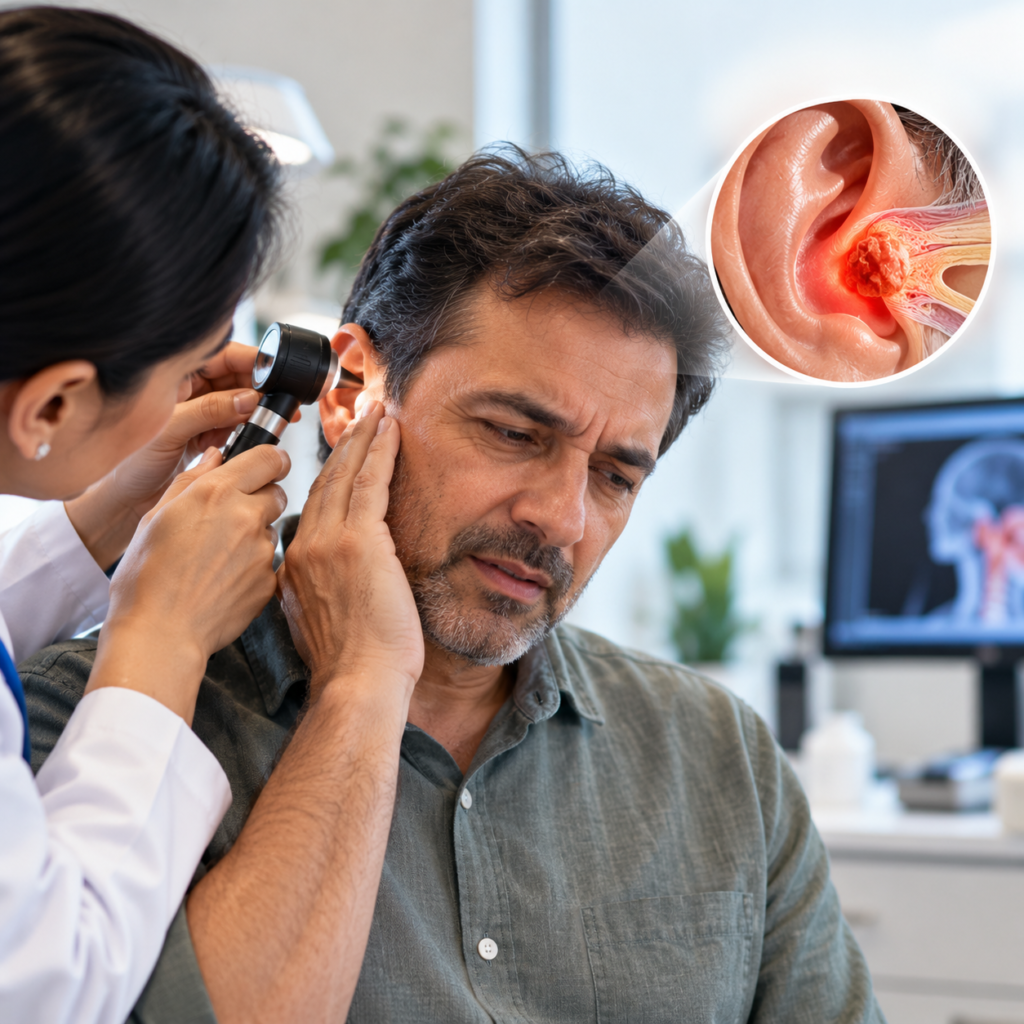
Ear cancer can resemble common ear conditions in its early stages. Persistent or unusual symptoms should be assessed by an appropriate specialist rather than being treated repeatedly without identifying the underlying cause.
- Persistent Ear Sore or Lesion: A sore, ulcer or abnormal growth on or around the ear that does not heal may require further evaluation.
- Ongoing Ear Pain: Persistent or unexplained pain in or around the ear can be associated with a tumour, particularly when it does not respond to routine treatment.
- Ear Discharge or Bleeding: Repeated discharge or bleeding from the ear, especially without an obvious cause, should be medically assessed.
- Hearing Changes: New or progressive hearing difficulty may occur when a tumour affects the ear canal or deeper ear structures.
- Lump or Abnormal Growth: A new lump, thickened area or visible growth on the outer ear or around the ear should be examined.
- Facial Weakness: In some cases, a tumour affecting structures near the facial nerve may cause weakness or changes in facial movement.
How Is Ear Cancer Diagnosed?
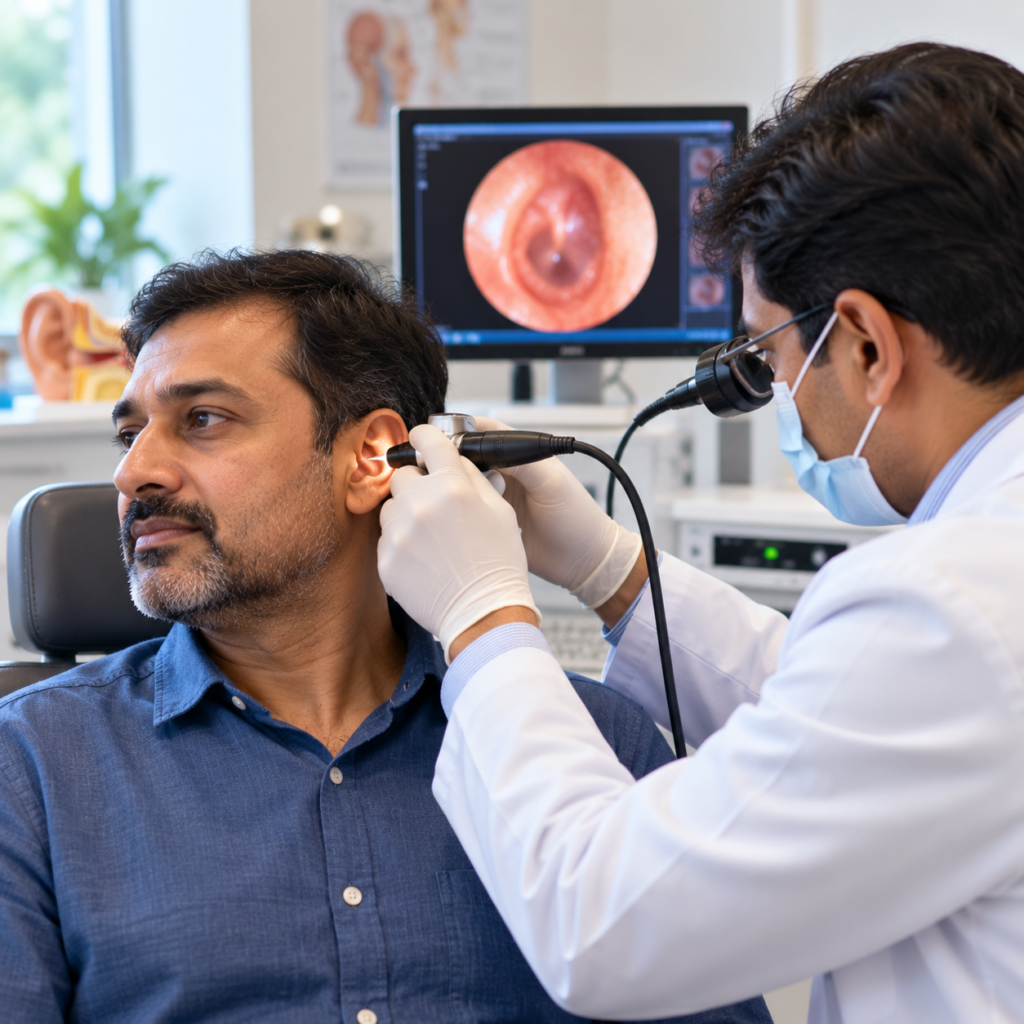
Because ear cancer can develop in different anatomical areas, diagnosis begins with a careful examination of the affected ear and surrounding structures. Further testing helps confirm the diagnosis and determine the extent of the disease.
- Ear & Head and Neck Examination: The specialist examines the outer ear, ear canal and nearby areas for abnormal growths, ulcers, swelling or other concerning changes.
- Otoscopic & Endoscopic Evaluation: Specialized examination may be used to view the ear canal and deeper areas that cannot be assessed from the outside.
- Biopsy: A sample of the abnormal tissue may be taken and examined by a pathologist to determine whether cancer cells are present and identify the tumour type.
- Imaging & Staging: CT or MRI may be used to assess the tumour and its relationship with nearby structures. Additional imaging may be recommended when needed to determine the extent of the cancer and plan treatment.
Advanced Ear Cancer Treatment Options
The treatment approach depends on where the cancer has developed, its size and type, whether nearby tissues or lymph nodes are involved, and the patient's overall health. Treatment may involve one or more approaches.
- Ear Cancer Surgery: Surgery may be recommended to remove the tumour and an appropriate margin of surrounding tissue. The extent of surgery depends on the location and spread of the cancer.
- Reconstructive Surgery: When cancer surgery affects the appearance or structure of the ear and nearby tissues, reconstruction may be considered to restore form and function where appropriate.
- Radiation Therapy: Radiation therapy may be used for selected ear cancers as the primary treatment or following surgery when additional cancer treatment is indicated.
- Lymph Node Management: If there is a risk or evidence of cancer involvement in the neck lymph nodes, appropriate evaluation and surgical or other treatment may be incorporated into the overall plan.
- Rehabilitation & Supportive Care: Depending on the treatment, patients may require support for hearing, wound healing, facial function, nutrition or other aspects of recovery.

Your Ear Cancer Treatment Journey
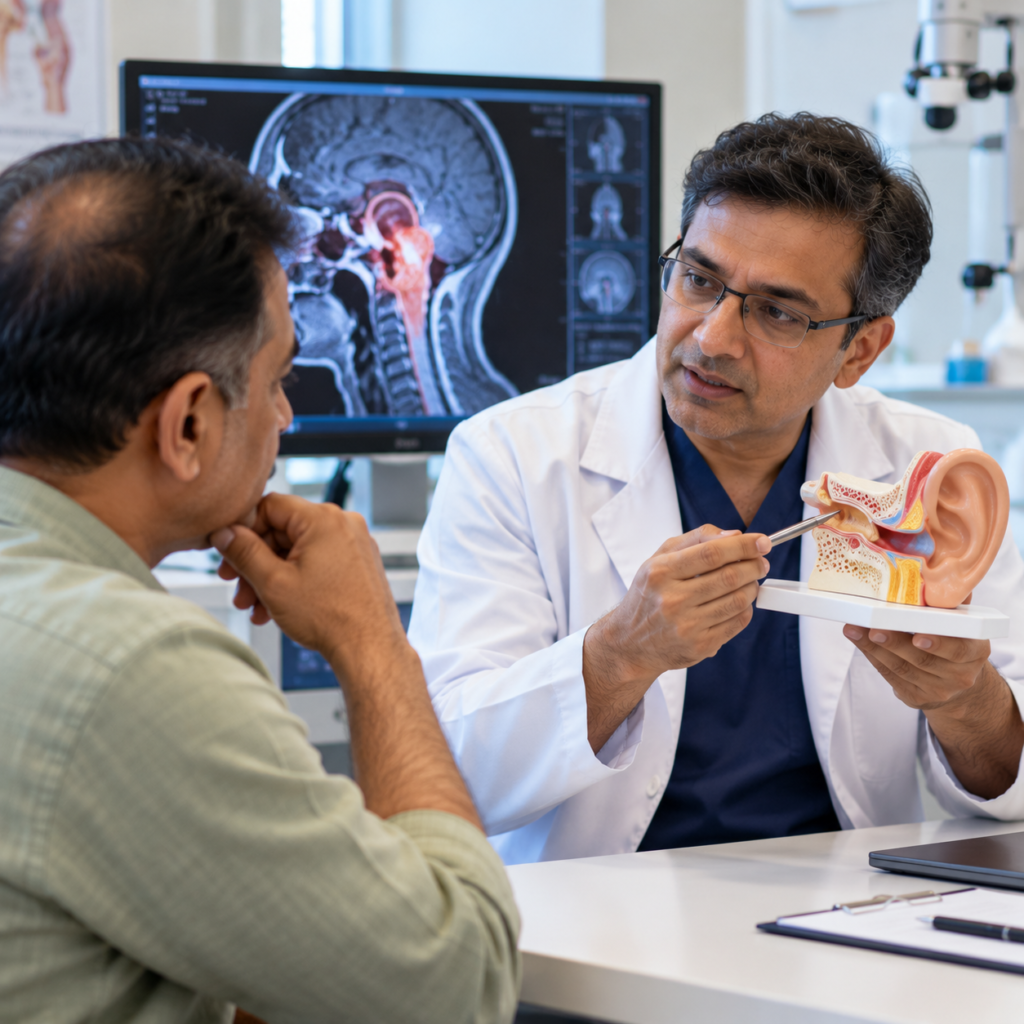
From confirming the diagnosis to completing treatment and follow-up, each stage of care is planned according to the location and extent of the ear cancer and the patient's individual requirements.
- Specialist Consultation: Your symptoms, medical history and examination findings are reviewed to understand the nature of the ear problem.
- Diagnosis & Disease Assessment: Biopsy and appropriate imaging are used to confirm the cancer and determine which structures are involved.
- Treatment Strategy: The findings are reviewed to determine the appropriate combination of surgery, radiation or other treatments.
- Cancer Treatment: The recommended treatment is carried out according to the tumour's location, stage and individual treatment plan.
- Recovery & Surveillance: Follow-up appointments help monitor healing, assess treatment response and identify any signs of recurrence or ongoing functional concerns.
Why Choose Peritus for Ear Cancer Treatment?
Ear cancer can involve delicate structures responsible for hearing, facial movement and the appearance of the ear. Peritus focuses on careful tumour assessment and individualized treatment planning while considering these important functional and structural concerns.
- Specialized Head & Neck Cancer Expertise: Care focused on cancers affecting the ear and surrounding head and neck structures.
- Detailed Tumour Assessment: The treatment approach is based on the exact location, type, size and extent of the ear tumour.
- Precision Cancer Surgery: Surgical treatment is planned to remove the cancer appropriately while considering nearby important structures.
- Reconstructive Care: When required, reconstructive techniques may help address structural or cosmetic changes resulting from cancer surgery.
- Functional Preservation: Treatment planning considers important functions such as hearing and facial nerve function whenever clinically appropriate.
- Continuity of Cancer Care: Patients receive follow-up after treatment to monitor recovery, treatment response and any signs of recurrence.

Visit Our Cancer Care Center
Locate our clinic in Gurgaon and book your consultation with our Head & Neck Cancer Specialist.