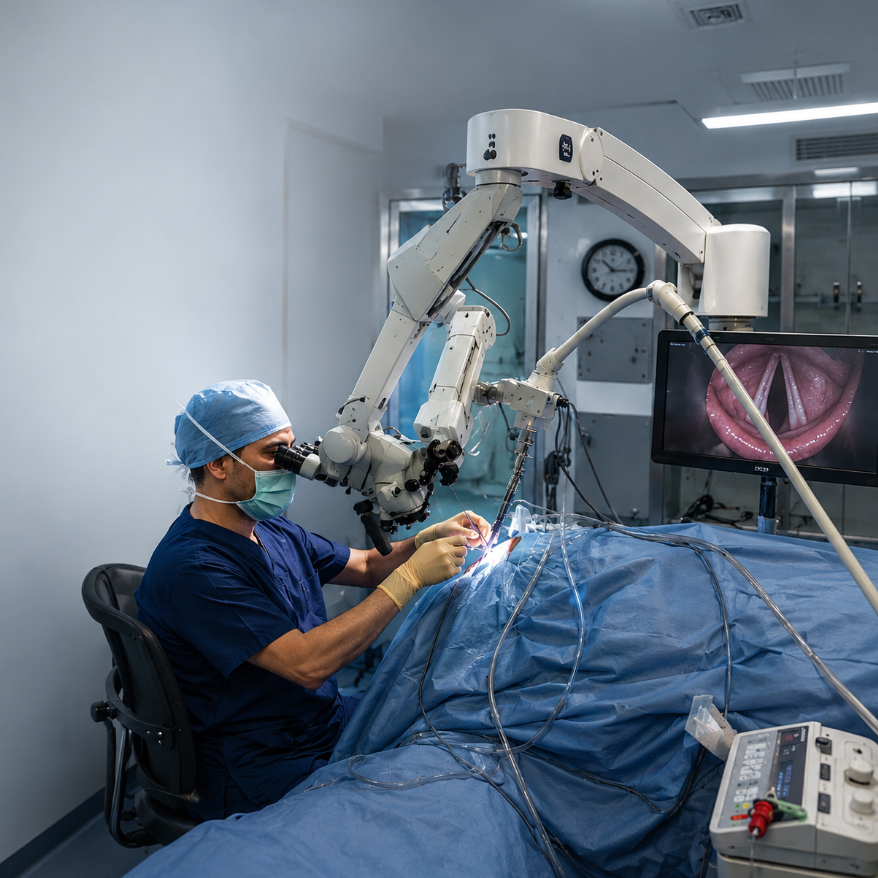
Laryngeal (Voice Box) Cancer Treatment in Gurgaon
Specialized Laryngeal Cancer Treatment by Experienced Head & Neck Cancer Specialists
Comprehensive treatment for laryngeal cancer with accurate diagnosis, voice box surgery, radiation therapy and personalized cancer care focused on preserving voice, swallowing and breathing function whenever possible.
- Experienced Head & Neck Cancer Specialists
- Advanced Laryngeal Cancer Surgery
- Voice & Function Preservation Focus
- Comprehensive Cancer Care
Comprehensive Laryngeal Cancer Treatment
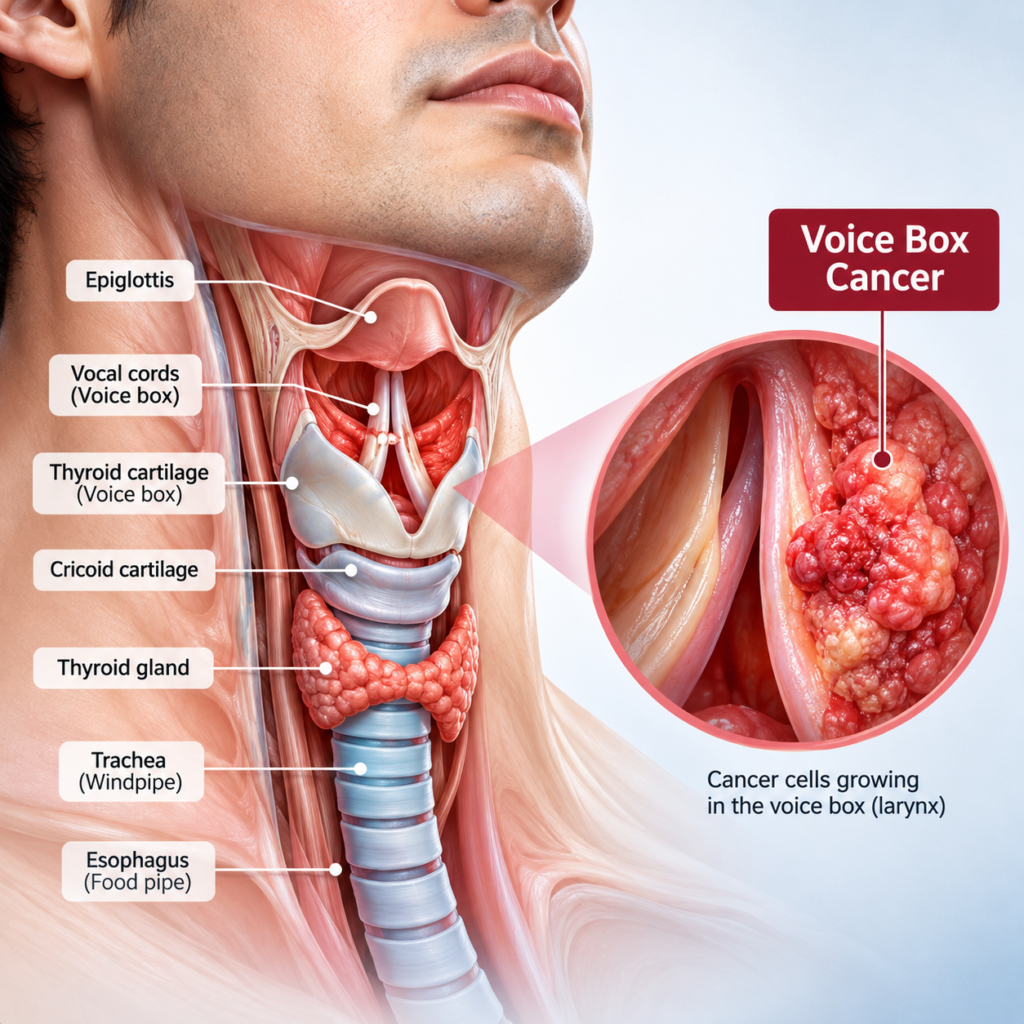
Laryngeal cancer develops in the larynx, or voice box, which plays an important role in speaking, breathing and protecting the airway during swallowing. It can affect different parts of the larynx, including the vocal cords. Common symptoms may include persistent hoarseness, changes in voice, difficulty swallowing, throat pain, breathing difficulty or a persistent lump in the neck. Symptoms that continue for several weeks should be evaluated by a Head & Neck Cancer Specialist. At Peritus, treatment is planned according to the location and extent of the cancer, stage, overall health and functional needs. Depending on the diagnosis, treatment may involve laryngeal surgery, radiation therapy, chemotherapy, targeted therapy or immunotherapy, either alone or in combination. The treatment approach also considers important functions such as voice, swallowing and airway protection.
Symptoms of Laryngeal Cancer
Laryngeal cancer symptoms can vary depending on which part of the voice box is affected.
- Persistent Hoarseness: A change in voice or hoarseness that does not improve may need evaluation, particularly when it persists.
- Voice Changes: A rough, weak or altered voice can occur when cancer affects the vocal cords or nearby structures.
- Difficulty Swallowing: Pain or difficulty while swallowing may occur as a laryngeal tumour grows or affects surrounding tissues.
- Breathing Difficulty: A narrowing of the airway can sometimes cause noisy breathing, shortness of breath or other breathing problems.
- Persistent Throat Pain: Ongoing pain or discomfort in the throat, especially when swallowing, can be a warning symptom.
- Lump in the Neck: Laryngeal cancer may spread to lymph nodes in the neck, causing a noticeable swelling or lump.


How Is Laryngeal Cancer Diagnosed?
Diagnosing laryngeal cancer involves examining the voice box closely, confirming the presence of cancer and determining its exact location and stage. A combination of endoscopic examination, biopsy and imaging helps specialists plan the appropriate treatment.
- Laryngoscopy & Clinical Examination: The specialist examines the throat, larynx and vocal cords. A flexible or direct laryngoscopy may be used to view areas that cannot be seen during a routine examination.
- Biopsy: A tissue sample from the suspicious area is examined under a microscope to confirm whether cancer cells are present and identify the cancer type.
- Imaging Tests: CT or MRI scans may be recommended to assess the tumour and surrounding structures. PET-CT may be considered when additional information about disease spread is required.
- Cancer Staging: The results of examination, biopsy and imaging are combined to determine the cancer stage and guide the treatment approach.
Advanced Laryngeal Cancer Treatment Options
Treatment for laryngeal cancer is selected according to the tumour's location, size, stage and involvement of nearby structures. The treatment plan may use surgery, radiation, medicines or a combination of approaches while considering important functions such as voice, swallowing and breathing.
- Laryngeal Cancer Surgery: Surgery may be used to remove the cancer while preserving as much normal laryngeal function as appropriate. The type of surgery depends on the tumour's size and location.
- Radiation Therapy: Radiation uses high-energy treatment to destroy cancer cells. It may be used as the primary treatment for selected cancers or after surgery when additional treatment is recommended.
- Chemotherapy: Chemotherapy may be combined with radiation or used in certain advanced cases. The treatment plan depends on the stage and individual characteristics of the cancer.
- Targeted Therapy & Immunotherapy: For selected advanced or recurrent cancers, targeted medicines or immunotherapy may be considered based on the tumour's characteristics and previous treatment.
- Voice & Swallowing Rehabilitation: Treatment can affect speaking and swallowing. Rehabilitation, speech therapy and swallowing support may form an important part of recovery depending on the treatment received.

Your Laryngeal Cancer Treatment Journey
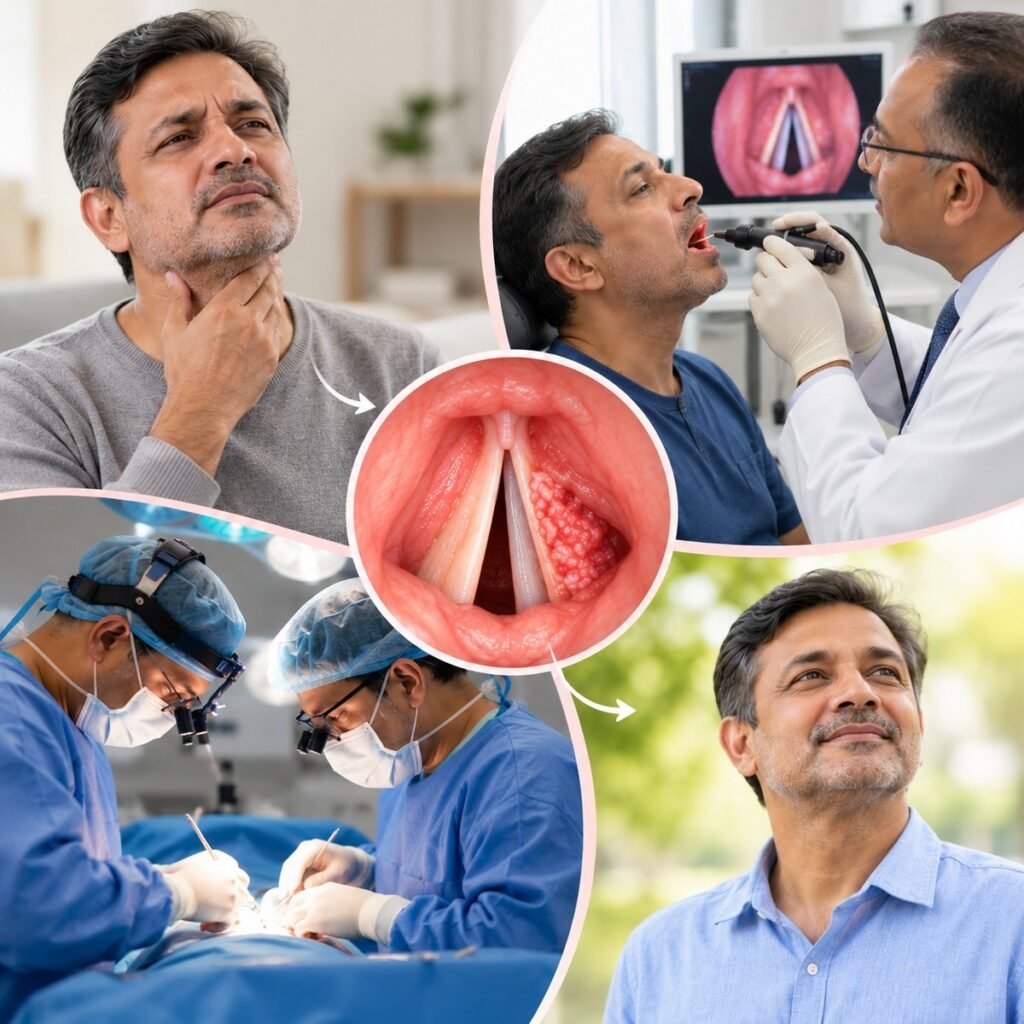
Every laryngeal cancer diagnosis requires an individualized approach. From the first consultation through treatment and follow-up, the care process is planned around controlling the cancer while supporting recovery and essential functions.
- Consultation & Evaluation: Your specialist reviews your symptoms, medical history and examination findings and assesses the larynx in detail.
- Diagnosis & Staging: Biopsy and appropriate imaging tests are performed to confirm the cancer and determine its extent.
- Personalized Treatment Planning: The medical team reviews your diagnosis and develops a treatment approach based on the tumour and your individual needs.
- Treatment: You receive the recommended treatment, which may involve surgery, radiation therapy, chemotherapy or other cancer medicines.
- Recovery & Long-Term Follow-up: After treatment, follow-up focuses on monitoring for recurrence and supporting voice, swallowing, nutrition and overall recovery when needed.
Why Choose Peritus for Laryngeal Cancer Treatment?
Laryngeal cancer treatment requires careful attention to both cancer control and the functions of the voice box. Peritus provides specialized Head & Neck Cancer care with treatment planning tailored to the individual's diagnosis and functional requirements.
- Experienced Head & Neck Cancer Specialists: Specialized evaluation and treatment for cancers involving the larynx and other structures of the head and neck.
- Personalized Treatment Planning: Treatment recommendations are developed according to the cancer's location, stage, characteristics and individual patient needs.
- Advanced Laryngeal Cancer Surgery: Surgical options are selected according to the extent and location of the tumour, with appropriate attention to preserving function whenever possible.
- Multidisciplinary Cancer Care: Different areas of cancer care can be coordinated to develop an appropriate treatment strategy for complex or advanced cases.
- Focus on Voice & Swallowing Function: Treatment planning considers important laryngeal functions, including speech, swallowing and airway protection.
- Comprehensive Follow-up Care: Ongoing follow-up helps monitor cancer status and address functional, nutritional or rehabilitation needs during recovery.

Visit Our Cancer Care Center
Locate our clinic in Gurgaon and book your consultation with our Head & Neck Cancer Specialist.