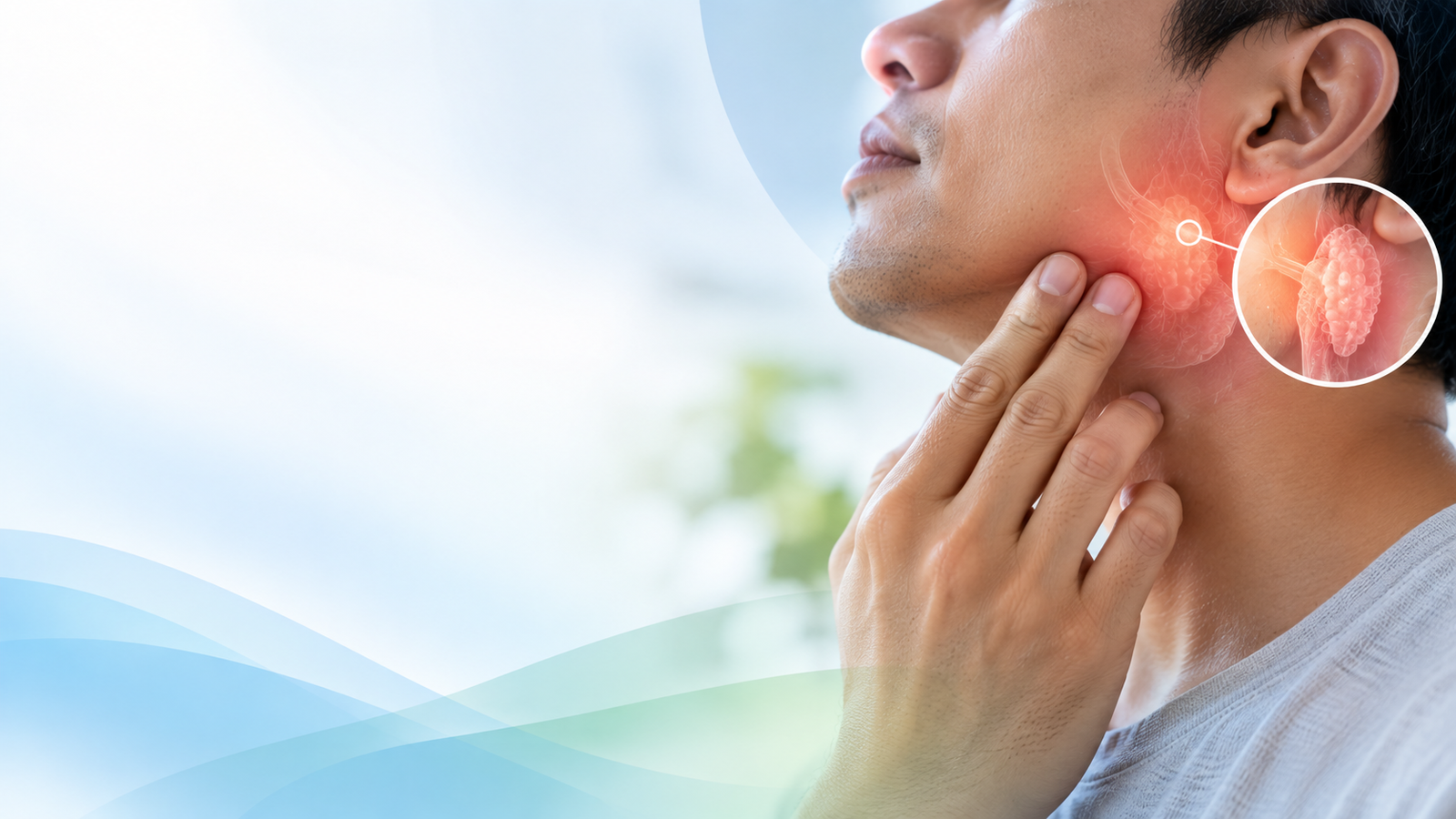
Salivary Gland Cancer Treatment in Gurgaon
Comprehensive Salivary Gland Cancer Care with Advanced Diagnosis, Expert Surgery, Reconstruction & Radiation Therapy Focused on Facial Nerve Preservation and Quality of Life.
- Experienced Head & Neck Cancer Specialists
- Advanced Salivary Gland Cancer Surgery
- Personalized Treatment Plans
- Comprehensive Cancer Care
Comprehensive Salivary Gland Cancer Treatment
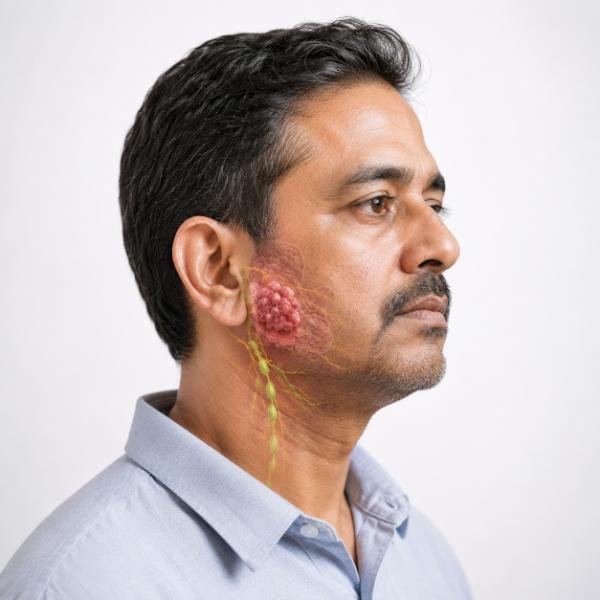
Salivary gland cancer is a rare type of head and neck cancer that develops in the salivary glands, which produce saliva to aid in chewing, swallowing, and digestion. These cancers most commonly affect the parotid gland, but they can also occur in the submandibular, sublingual, or minor salivary glands. Early symptoms may include a painless lump near the jaw, cheek, or neck, facial weakness, or difficulty swallowing. At Peritus Head & Neck Cancer Centre, we provide personalized salivary gland cancer treatment based on the type, grade, and stage of the tumour. Depending on your diagnosis, treatment may include salivary gland surgery, facial nerve preservation or reconstruction, radiation therapy, targeted therapy, or other advanced treatment options. Our multidisciplinary team focuses on achieving the best possible cancer control while preserving facial movement, speech, and overall quality of life. Whether you have recently been diagnosed with salivary gland cancer or are seeking a second opinion, our specialists provide compassionate care, advanced treatment, and continuous support throughout your cancer journey.
Signs & Symptoms of Salivary Gland Cancer
Salivary gland cancer often begins as a painless swelling. Persistent lumps or facial changes should always be evaluated by a Head & Neck Cancer Specialist.
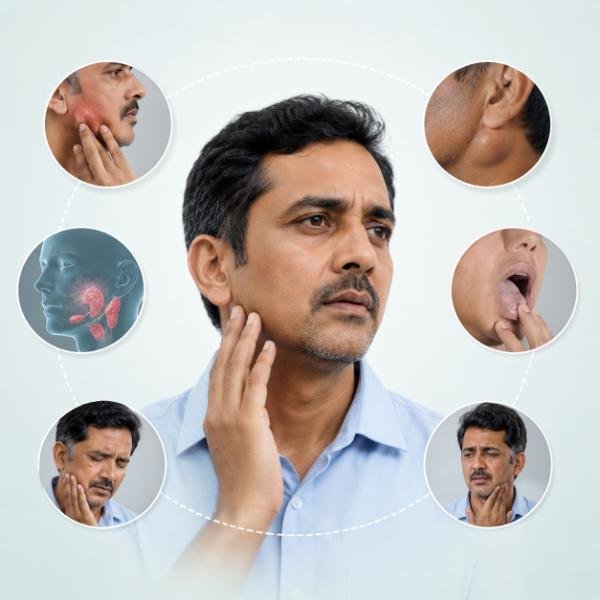
- Lump Near the Jaw or Ear: A painless lump near the jaw, ear, cheek, or neck is one of the most common early signs of salivary gland cancer.
- Facial Weakness or Numbness: Weakness, numbness, or difficulty moving one side of the face may occur if the tumour affects the facial nerve.
- Persistent Swelling: Swelling around the jaw, cheek, or mouth that does not improve over time should be medically evaluated.
- Difficulty Swallowing: Some patients may experience discomfort or difficulty swallowing as the tumour grows.
- Pain Around the Jaw or Ear: Persistent pain in the jaw, ear, or surrounding area may be associated with salivary gland cancer, especially in advanced cases.
- Difficulty Opening the Mouth: A growing tumour may cause stiffness or reduced ability to open the mouth comfortably.
How is Salivary Gland Cancer Diagnosed?
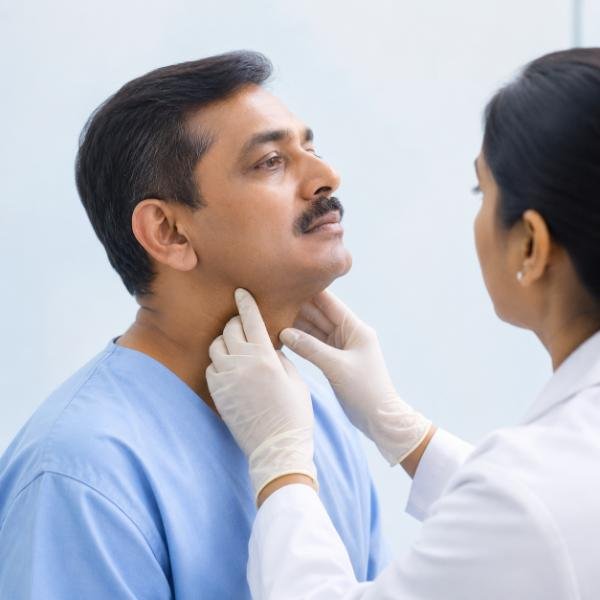
Accurate diagnosis is the first step toward effective salivary gland cancer treatment. At Peritus Head & Neck Cancer Centre, our specialists use advanced diagnostic techniques to identify the type, location, and stage of the tumour before creating a personalized treatment plan.
- Clinical Examination: A detailed examination is performed to assess the size, location, and characteristics of the salivary gland lump, along with facial nerve function and lymph node involvement.
- Imaging & Biopsy: Ultrasound, MRI, or CT Scan helps evaluate the tumour, while Fine Needle Aspiration Cytology (FNAC) or a biopsy is used to confirm the diagnosis and determine the type of salivary gland cancer.
- Advanced Imaging: In selected cases, PET-CT may be recommended to assess whether the cancer has spread and to accurately stage the disease before treatment.
- Personalized Treatment Planning: Once the diagnosis is confirmed, our multidisciplinary team develops an individualized treatment plan based on the type, stage, and extent of the cancer, along with your overall health.
Advanced Salivary Gland Cancer Treatment Options
At Peritus Head & Neck Cancer Centre, we offer personalized treatment based on the type, grade, and stage of salivary gland cancer. Our goal is to achieve effective cancer control while preserving facial nerve function and maintaining quality of life whenever possible.
- Salivary Gland Cancer Surgery: Surgery is the primary treatment for most salivary gland cancers and involves removing the tumour along with affected salivary gland tissue. Lymph node removal may also be recommended in certain cases.
- Facial Nerve Preservation & Reconstruction: When the tumour is close to the facial nerve, our surgical team carefully plans treatment to preserve nerve function whenever medically possible. If required, reconstructive procedures may be performed to restore facial movement.
- Radiation Therapy: Radiation therapy may be recommended after surgery or as the primary treatment in selected cases to reduce the risk of recurrence and improve treatment outcomes.
- Targeted Therapy: For advanced or recurrent salivary gland cancers, targeted therapy may be considered depending on the tumour type and molecular characteristics.
- Long-Term Follow-up Care: Regular follow-up appointments, imaging, and clinical evaluations help monitor recovery, assess treatment response, and detect recurrence at an early stage.
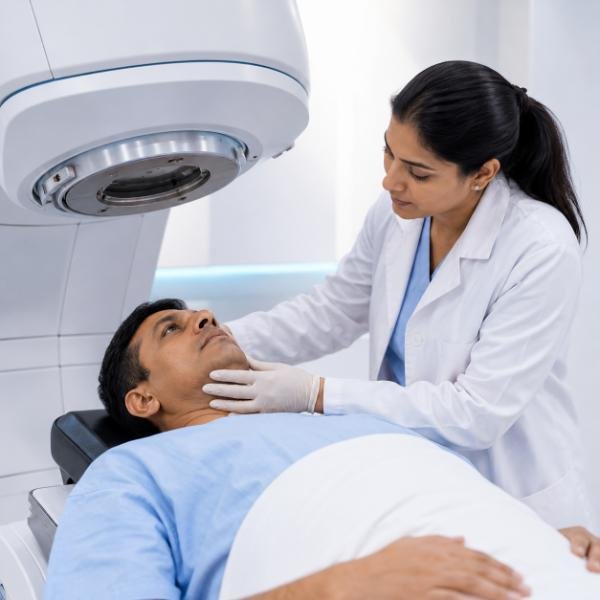

Your Salivary Gland Cancer Treatment Journey
From your first consultation to recovery, our multidisciplinary team supports you throughout every stage of your treatment with personalized care and expert guidance.
- 1. Consultation & Evaluation: Meet our Head & Neck Cancer Specialist for a comprehensive assessment of your symptoms, medical history, imaging reports, and previous investigations.
- 2. Diagnosis & Staging: Advanced imaging, FNAC or biopsy, and other diagnostic tests are used to confirm the diagnosis, determine the type of salivary gland cancer, and assess its stage.
- 3. Personalized Treatment Planning: Our multidisciplinary team develops a customized treatment plan based on the location, type, and extent of the tumour, along with your overall health and treatment goals.
- 4. Treatment: Treatment may include salivary gland surgery, facial nerve preservation or reconstruction, radiation therapy, targeted therapy, or a combination of treatments based on your diagnosis.
- 5. Recovery & Long-Term Follow-up: After treatment, we provide ongoing follow-up care, rehabilitation when needed, and regular monitoring to support recovery, preserve function, and detect any recurrence as early as possible.
Why Choose Peritus for Salivary Gland Cancer Treatment?
At Peritus Head & Neck Cancer Centre, we combine advanced surgical expertise, multidisciplinary cancer care, and personalized treatment to provide comprehensive salivary gland cancer treatment with the best possible outcomes.
- Experienced Head & Neck Cancer Specialists: Our specialists have extensive experience in diagnosing and treating both common and rare salivary gland cancers using evidence-based treatment approaches.
- Personalized Treatment Plans: Every patient receives an individualized treatment plan based on the type, grade, stage, and location of the tumour, ensuring the most appropriate care.
- Advanced Salivary Gland Cancer Surgery: We perform advanced salivary gland cancer surgery with a focus on complete tumour removal while preserving surrounding healthy tissues whenever medically possible.
- Multidisciplinary Cancer Care: Our Head & Neck Cancer Specialists work closely with radiologists, pathologists, radiation oncologists, medical oncologists, and rehabilitation experts to deliver coordinated, patient-centered care.
- Focus on Facial Nerve Preservation: Whenever medically appropriate, we use meticulous surgical techniques to preserve the facial nerve, helping maintain facial movement, expression, and overall quality of life.
- Comprehensive Follow-up Care: From diagnosis through recovery and long-term monitoring, we provide continuous follow-up care to assess treatment response, detect recurrence early, and support your recovery.

Visit Our Cancer Care Center
Locate our clinic in Gurgaon and book your consultation with our Head & Neck Cancer Specialist.