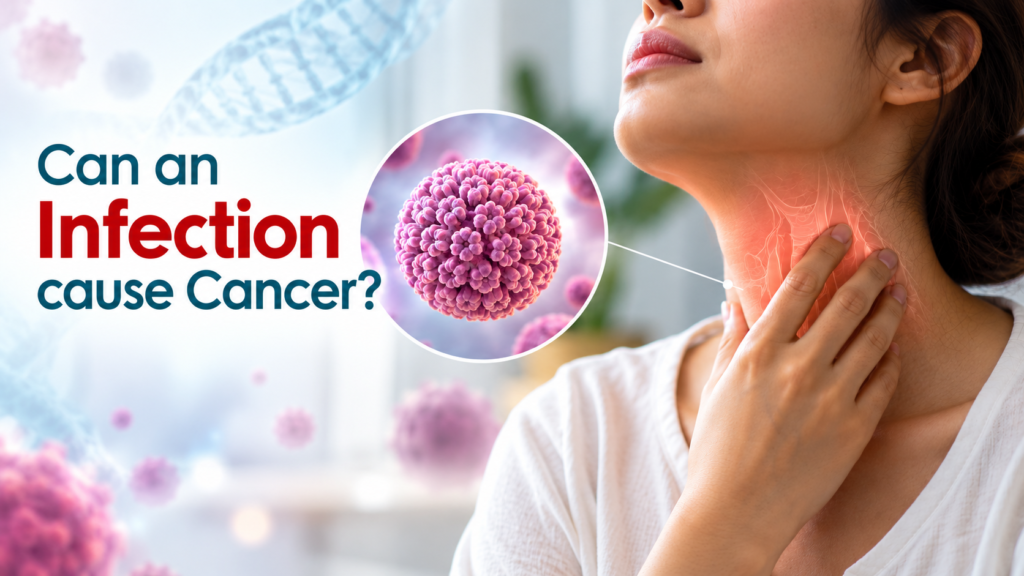
“Can an infection really cause cancer?”
Yes, certain infections can contribute to the development of cancer. A new analysis from the International Agency for Research on Cancer (IARC) estimates that 2.3 million new cancer cases worldwide in 2024 were attributable to infections — about 12% of all new cancer cases.
But this does not mean that every infection causes cancer. Only certain infections have established links with specific types of cancer.
For patients concerned about head and neck cancer, human papillomavirus (HPV) is particularly important because certain high-risk HPV infections are associated with some cancers in this region.
This article explains which infections are linked to cancer, how HPV is connected to head and neck cancer, what symptoms to watch for, and when it is important to seek medical advice.
Can an Infection Really Cause Cancer?
Yes, certain infections can contribute to cancer.
Some viruses and bacteria can contribute to cancer development when an infection persists and causes long-term changes in cells or tissues. However, having one of these infections does not mean that a person will develop cancer.
Cancer usually develops through a combination of factors. These can include the type of infection, how long it persists, individual health factors and other environmental or lifestyle exposures.
The new IARC analysis provides an updated global estimate of the number of cancers attributable to infections. It estimates that around one in eight new cancer cases worldwide in 2024 was linked to an infection.
It is important to understand the difference between having an infection and having infection-related cancer. An infection may increase risk in certain circumstances, but it does not make cancer inevitable.
Which Infections Are Linked to Cancer?
Not all infections are linked to cancer. The connection depends on the specific infectious agent and the type of cancer involved.
The IARC analysis includes several established infection–cancer relationships, including human papillomavirus (HPV), Helicobacter pylori (H. pylori), hepatitis B virus (HBV), hepatitis C virus (HCV), Epstein–Barr virus (EBV) and HIV. The updated analysis also includes additional infectious agents and newly established infection–cancer associations.
Different infections are associated with different cancers. For example, H. pylori is linked to certain stomach cancers, while hepatitis B and C viruses are associated with liver cancer. HPV is particularly relevant to cervical cancer and certain anogenital and head and neck cancers.
So, an infection does not cause every type of cancer. The infection and the cancer type have to be considered together.
For the complete findings, you can read the IARC 2026 analysis on cancers attributable to infections.
What Is the Connection Between HPV and Head & Neck Cancer?
Human papillomavirus (HPV) is a very common viral infection. Most HPV infections do not lead to cancer. However, certain high-risk HPV types, particularly HPV-16, are strongly associated with some head and neck cancers.
The clearest connection is with oropharyngeal cancer, which can affect areas such as the tonsils and base of the tongue. HPV-related oropharyngeal cancer can occur in people who have never smoked or used tobacco.
This can be confusing for patients because head and neck cancer is often associated with smoking or tobacco use. HPV is one reason why tobacco history alone cannot explain every case.
However, having HPV does not mean you have cancer. Most HPV infections do not progress to cancer. The HPV type, whether the infection persists and other individual factors all matter.
Peritus also explains HPV alongside other head and neck cancer risk factors, helping patients understand that cancer risk usually involves more than one factor.
Can HPV Cause Head & Neck Cancer in Someone Who Never Smoked?
Yes, HPV-associated head and neck cancers can occur in people who have never smoked.
Tobacco is an important risk factor for many head and neck cancers, particularly cancers of the oral cavity, throat and voice box. But certain high-risk HPV infections provide another established pathway associated with oropharyngeal cancer, including cancers involving the tonsils and base of the tongue.
This means that someone should not assume they have no risk of head and neck cancer simply because they have never smoked.
At the same time, there is no reason to assume that every non-smoker with HPV will develop cancer. HPV infection does not make cancer inevitable.
If you have a persistent mouth or throat symptom, it is better to have it evaluated rather than trying to determine its cause from your smoking or HPV history alone.
For more information about oral cancer risk in people who do not smoke, read Can Non-Smokers Get Oral Cancer? Understanding the Risk Factors.
Does Having HPV Mean You Have Cancer?
No. Having HPV does not mean that you have cancer.
HPV infections are common, and most do not progress to cancer. Cancer risk is associated with certain high-risk HPV types, particularly when an infection persists and contributes to long-term changes in cells.
So, simply knowing that you have HPV is not enough to determine whether you have or will develop head and neck cancer.
If you have an abnormal finding or a persistent symptom, a healthcare professional can assess the situation and decide whether further examination or testing is needed.
The important message is to avoid both extremes: HPV should not be ignored as a cancer-related risk factor, but an HPV infection should not automatically be interpreted as cancer.
What Symptoms of Head & Neck Cancer Should You Not Ignore?
Head and neck cancer can cause different symptoms depending on where it develops. Possible warning signs include:
- A mouth ulcer that does not heal
- A persistent red or white patch inside the mouth
- A lump in the mouth or neck
- Persistent sore throat
- Difficulty or pain while swallowing
- Persistent mouth or throat pain
- Hoarseness or a lasting change in the voice
- Difficulty moving the tongue or jaw
- Unexplained bleeding
- Unexplained weight loss
- Persistent ear pain without an obvious ear problem
These symptoms do not automatically mean cancer. Infections, dental problems and other less serious conditions can cause similar symptoms. Peritus also notes that persistent symptoms should be evaluated rather than ignored.
What matters is whether a symptom persists, worsens, keeps returning or has no clear explanation.
For a persistent mouth ulcer, you can read Peritus’s guide on Mouth Ulcer vs Oral Cancer to understand the warning signs and when further evaluation may be appropriate.
If an oral symptom needs medical assessment, Peritus’s Oral Cancer Treatment page explains the evaluation and treatment options available for patients with suspected or diagnosed oral cancer..
Can Infection-Related Cancer Be Prevented?
Not every infection-related cancer can be prevented, but some infection-related cancer risks can be reduced.
Vaccination is an important example. HPV vaccination can help prevent infections with HPV types that can cause certain cancers. Hepatitis B vaccination can also help reduce the risk of hepatitis B infection and related liver cancer.
For some infections, appropriate screening, testing and treatment may also help reduce the risk of cancer developing later. The IARC highlights vaccination and prevention or control of cancer-causing infections as important ways to reduce the global burden of infection-related cancers. (IARC)
For head and neck cancer, avoiding tobacco and limiting other established risk factors remains important.
Prevention can reduce risk, but no preventive measure guarantees that cancer will never develop.
When Should You See a Head & Neck Cancer Specialist?
You should consider professional evaluation if you have a symptom that persists, worsens or has no clear explanation, including:
- A mouth ulcer that does not heal
- A persistent red or white patch
- A lump in the mouth or neck
- Difficulty or pain while swallowing
- Persistent throat symptoms
- A lasting change in your voice or hoarseness
- Persistent mouth or throat pain
- Unexplained bleeding
- Another unusual symptom that does not improve
You do not need to smoke or use tobacco to have a persistent head and neck symptom evaluated.
These symptoms can have causes other than cancer. A specialist can examine the relevant area, review your medical history and determine whether imaging, a biopsy or another investigation is appropriate.
Peritus provides comprehensive Oral Cancer Treatment for cancers affecting the mouth, including personalised evaluation and treatment planning.
When cancer surgery is required, treatment may involve procedures tailored to the location and extent of the disease. Peritus’s Head & Neck Cancer Surgery service covers surgery for cancers of the oral cavity, tongue, throat, voice box and other head and neck sites.
Conclusion
Yes, certain infections can contribute to cancer. The new IARC analysis estimates that infections were responsible for about 2.3 million new cancer cases worldwide in 2024, around 12% of all new cancer cases. HPV is particularly relevant to certain head and neck cancers, especially oropharyngeal cancer.
But having HPV does not mean you have cancer, and not smoking does not completely eliminate the possibility of head and neck cancer.
Prevention, vaccination where appropriate and timely medical evaluation can help reduce risk and identify concerning changes early. If a symptom persists or has no clear explanation, it is worth getting it checked.
Worried About a Persistent Head & Neck Symptom?
If you have a persistent mouth ulcer, neck lump, difficulty swallowing, voice change or another unusual head and neck symptom, consider getting it evaluated by a specialist.
Consult a Head & Neck Cancer Specialist in Gurugram
Call: +91 9217 317742
Frequently Asked Questions
Can an infection really cause cancer?
Yes. Certain infections are known to contribute to specific cancers. Examples include HPV, hepatitis B and C viruses, H. pylori and Epstein-Barr virus (EBV). However, having an infection does not mean you will develop cancer. The risk depends on the specific infection, the cancer type and other individual factors.
Can HPV cause head & neck cancer?
Yes. Certain high-risk HPV infections are linked to some head and neck cancers, particularly oropharyngeal cancers, which can affect the tonsils and base of the tongue. HPV is not linked equally to every head and neck cancer, so the specific cancer site matters when understanding the risk.
Can HPV cause cancer if I don’t smoke?
Yes. HPV-related oropharyngeal cancer can occur in people who have never smoked. Tobacco is an important risk factor for many head and neck cancers, but HPV is a separate risk factor for certain cancers. Therefore, not smoking does not completely eliminate the possibility of head and neck cancer.
Does having HPV mean I have cancer?
No. Most HPV infections do not mean that a person has cancer. Many HPV infections are cleared by the body’s immune system. Only certain persistent infections with high-risk HPV types are associated with particular cancers. If you have concerns about HPV or persistent symptoms, a doctor can advise whether further evaluation is needed.
Which head & neck cancers are linked to HPV?
HPV is most strongly associated with oropharyngeal cancers, particularly cancers involving the tonsils and the base of the tongue. HPV can also be detected in some other head and neck cancers, but the strength of the association varies by cancer site. It is important not to treat all head and neck cancers as HPV-related.
Can HPV-related cancer be prevented?
The risk can be reduced, although prevention cannot guarantee that cancer will never develop. HPV vaccination can help prevent infection with HPV types that can cause certain cancers. Avoiding tobacco and following appropriate preventive healthcare recommendations can also help reduce overall head and neck cancer risk.
What are the early symptoms of HPV-related head & neck cancer?
Possible symptoms include a persistent neck lump, ongoing sore throat, difficulty or pain while swallowing, ear pain without an obvious ear problem, voice changes or other persistent throat symptoms. These symptoms can have many causes and do not automatically indicate cancer. Persistent or unexplained symptoms should be evaluated rather than ignored.
Which doctor should I see if I am worried about HPV or head & neck cancer?
A Head & Neck Cancer Specialist or Head & Neck Surgical Oncologist can evaluate persistent symptoms and determine whether further testing is needed. Depending on your symptoms, this may include a physical examination, imaging or biopsy. If you are concerned about a persistent mouth, throat or neck symptom, specialist evaluation can provide a clearer answer.