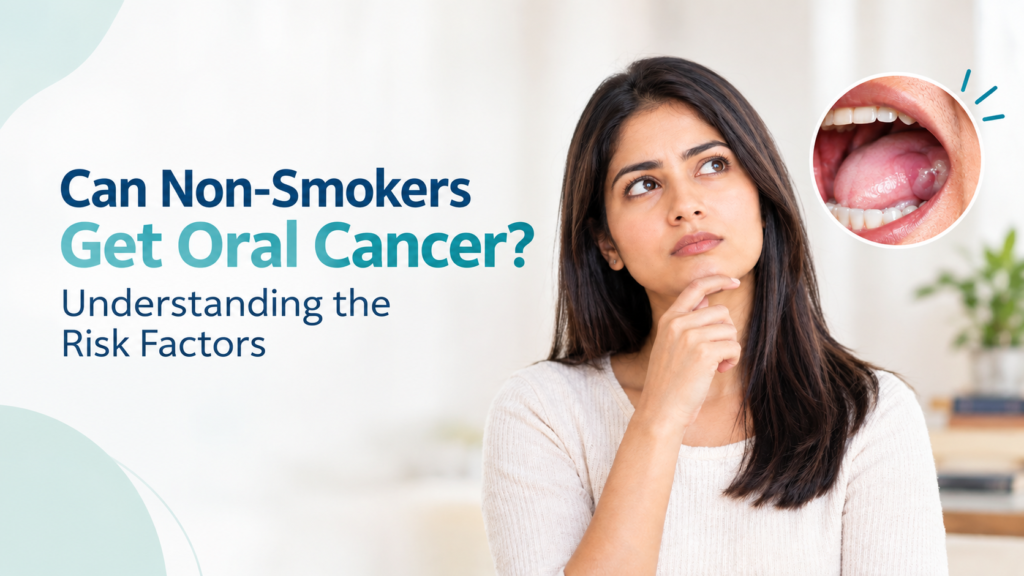
“I don’t smoke or chew tobacco. Can I still get oral cancer?”
Yes, non-smokers can develop oral cancer. Tobacco is an important risk factor, but it is not the only one. Certain HPV infections, alcohol consumption, areca nut or betel quid use, previous head and neck cancer and other individual factors may also play a role.
In some people, doctors may not be able to identify one clear reason why oral cancer developed. Not having a known risk factor therefore does not completely eliminate the possibility.
At the same time, having a risk factor does not mean that you will develop cancer. Understanding the possible risks can help you recognise unusual changes and know when to seek medical advice.
This article explains why oral cancer can occur in non-smokers, the symptoms to watch for, how it is diagnosed and when to see a specialist.
Can Non-Smokers Get Oral Cancer?
Yes, non-smokers can develop oral cancer.
Smoking and other forms of tobacco use increase the risk of several oral cancers. However, oral cancer can also occur in people who have never smoked.
Risk depends on multiple factors rather than one habit alone. Certain HPV infections, alcohol consumption, areca nut or betel quid use, previous head and neck cancer and individual health factors may contribute to risk. Peritus also explains that some people can develop head and neck cancer without an obvious risk factor in its guide to head and neck cancer risk factors.
This does not mean that every non-smoker with a mouth ulcer, red patch or lump has cancer. Many common conditions can cause similar symptoms.
The important point is to have a persistent, unusual or unexplained change examined rather than trying to diagnose it yourself.
What Is Oral Cancer?
Oral cancer, also called mouth cancer, develops in tissues of the mouth. It can affect the lips, tongue, gums, inner cheeks, floor of the mouth and roof of the mouth.
Oral cancer is part of the broader group of head and neck cancers. These cancers can also develop in areas such as the throat, voice box, salivary glands, nose, sinuses and thyroid.
Understanding where a cancer starts is important because different areas can have different symptoms, risk factors and treatment approaches.
If you want to understand the different areas covered under head and neck cancer, Peritus’s Understanding Head & Neck Cancer guide provides a broader overview.
What Causes Oral Cancer in Non-Smokers?
There is no single cause behind every case of oral cancer. In people who do not smoke, other recognised risk factors may still be relevant.
1. HPV Infection
Certain high-risk types of human papillomavirus (HPV) are associated with some head and neck cancers. HPV is particularly relevant to cancers of the oropharynx, including cancers involving the tonsils and base of the tongue.
HPV-related head and neck cancers can occur in people who have never smoked or used tobacco. This is one reason why not smoking does not completely remove the possibility of head and neck cancer.
However, having an HPV infection does not mean that a person has cancer. HPV infections are common, and many clear without causing cancer. Only certain persistent high-risk HPV infections are associated with cancer development.
It is also important not to assume that HPV is responsible for every oral cancer in a non-smoker. Different cancers can have different risk factors, and some people may have no obvious risk factor.
You can learn more about HPV and other factors in Peritus’s head and neck cancer risk factors guide.
2. Alcohol Consumption
Alcohol is a recognised risk factor for several head and neck cancers. Its effect is not limited to people who smoke.
Regular alcohol consumption can increase the risk of cancers affecting areas such as the mouth and throat. The risk generally increases with greater alcohol exposure.
People who both smoke and drink heavily can have a higher risk, but alcohol can also contribute to cancer risk independently of tobacco.
This means that not smoking does not completely remove the risk associated with alcohol.
If you drink regularly, discussing your overall risk factors with a qualified healthcare professional can help you understand what steps may be appropriate for you.
3. Areca Nut, Betel Nut and Smokeless Products
For patients in India, this is an especially important risk factor to understand.
Products such as gutka, khaini, zarda, betel quid and areca nut (supari) are not risk-free simply because they are not smoked. Some products contain tobacco, while areca nut itself is also associated with cancer risk.
Smokeless does not mean risk-free.
A person who has never smoked can still have an increased risk of oral cancer through regular use of these products. This is particularly relevant in India, where chewing tobacco, gutka, paan and supari may be part of everyday habits.
If you use these products, stopping them can help reduce your exposure to known oral cancer risk factors. Peritus also discusses paan and areca nut as head and neck cancer risk factors.
4. Previous Head & Neck Cancer
A previous head and neck cancer diagnosis can also be relevant to future cancer risk.
People who have already been treated for head and neck cancer may have a higher risk of developing another cancer in the head and neck region. This is one reason regular follow-up remains important after treatment.
Follow-up allows the medical team to monitor recovery and investigate new or persistent changes when necessary.
Having had cancer before does not mean another cancer will definitely develop. It simply means that continued medical follow-up can be an important part of long-term care.
5. Age and Other Individual Factors
The risk of many cancers increases with age, but age alone does not determine whether someone will develop oral cancer.
A person’s health history, previous exposures and other individual factors may also influence risk. Some people may have several recognised risk factors, while others may have very few or none.
In some cases, doctors may not be able to identify one clear reason why cancer developed. Peritus also notes that some people can develop head and neck cancer without an obvious risk factor.
This is why the absence of smoking or another known risk factor should not be used to dismiss a persistent or unusual change in the mouth.
Can a Non-Smoker Get Oral Cancer Without Any Known Risk Factor?
Yes.
Known risk factors help doctors understand a person’s overall risk, but they cannot explain every individual case. Some people may have several recognised risk factors, while others may have very few or none.
Tobacco, alcohol, certain HPV infections and areca nut can all be relevant in different situations. However, not every person with oral cancer will have a clear history of these exposures.
This is why symptoms should not be dismissed simply because you do not smoke or drink.
A persistent mouth ulcer, unusual patch, lump, bleeding or another change that does not improve should be assessed by a healthcare professional. The aim is not to assume that the symptom is cancer, but to identify its cause and make sure an important problem is not overlooked.
What Symptoms of Oral Cancer Should Non-Smokers Watch For?
Oral cancer can cause changes inside the mouth that may initially look like common dental or oral problems.
Possible symptoms include:
- A mouth ulcer that does not heal
- A persistent red or white patch
- A lump or thickened area inside the mouth
- Unexplained bleeding
- Persistent mouth pain or discomfort
- Numbness or an unusual sensation
- Difficulty chewing
- Difficulty swallowing
- Difficulty moving the tongue or jaw
- Unexplained loosening of teeth
These symptoms do not automatically mean oral cancer. Many common conditions can cause similar changes.
What matters is whether the symptom is persistent, unusual, worsening or unexplained. If a symptom does not improve or keeps returning, it should be examined rather than repeatedly treated at home.
If you have a mouth ulcer that does not heal, Peritus’s detailed guide explains how a common mouth ulcer differs from changes that may need further evaluation.
Does a Mouth Ulcer Mean Oral Cancer?
No. Most mouth ulcers are not oral cancer.
A mouth ulcer can develop because of minor injury, irritation and several other non-serious causes. Most common ulcers gradually improve and heal.
However, an ulcer that continues beyond 2–3 weeks should be examined, particularly if it becomes larger, changes in appearance, bleeds, feels unusually hard or occurs with a lump or another persistent mouth change.
The appearance of an ulcer alone cannot confirm whether it is cancer. A healthcare professional can examine the area and decide whether further testing is necessary.
For a more detailed explanation of healing time, warning signs and the differences between a common ulcer and a concerning lesion, read Mouth Ulcer vs Oral Cancer: How to Tell the Difference.
Does a Neck Lump Mean Oral Cancer?
No. A neck lump does not automatically mean oral cancer.
Swollen lymph nodes caused by infections and other common conditions can produce lumps in the neck. However, a lump that persists, grows or appears without an obvious reason should be examined by a healthcare professional.
It is particularly important to seek evaluation if the lump occurs along with other persistent symptoms such as difficulty swallowing, a change in the voice, persistent throat symptoms or unexplained weight loss.
A specialist can examine the mouth, throat and neck and decide whether further investigation is needed. Peritus’s Oral Cancer Treatment page explains how clinical examination can include the mouth, tongue, throat and neck, along with further testing when required.
How Is Oral Cancer Diagnosed?
If a mouth or oral symptom needs further evaluation, diagnosis usually starts with a detailed clinical examination. The exact tests depend on what the doctor finds.
Clinical Examination
The specialist examines the mouth, tongue, gums, throat and neck for ulcers, patches, lumps, swelling or other unusual changes. The neck may also be checked for enlarged lymph nodes.
Medical History
The doctor may ask how long you have had the symptom, whether it has changed over time and whether you have experienced pain, bleeding, difficulty swallowing or other problems.
They may also ask about tobacco, alcohol, gutka or areca nut use, previous cancer and other relevant health factors.
Further Tests
If an abnormal area needs closer evaluation, your doctor may recommend imaging such as a CT scan, MRI or PET-CT. A biopsy may also be performed, where a small tissue sample is examined under a microscope to confirm whether cancer cells are present.
Peritus describes how oral cancer is diagnosed through clinical examination, biopsy, imaging and staging depending on the individual case.
Can You Reduce Your Risk of Oral Cancer?
You cannot control every factor linked to oral cancer, but you can reduce exposure to several known risk factors.
Practical steps include:
- Avoid smoking and tobacco products.
- Avoid gutka, khaini, zarda and other smokeless tobacco products.
- Avoid or reduce areca nut, supari and betel quid products.
- Limit alcohol consumption.
- Discuss HPV vaccination with a qualified healthcare professional when appropriate.
- Maintain good oral hygiene and look after your dental health.
- Attend regular dental check-ups.
- Do not ignore a mouth ulcer, patch, lump or other change that remains persistent or unusual.
These steps can help reduce exposure to known risk factors, but reducing risk does not guarantee that oral cancer will be prevented.
Some people can develop oral cancer without an obvious risk factor. This is why knowing the warning signs remains important even if you avoid tobacco and other known exposures.
When Should a Non-Smoker See an Oral Cancer Specialist?
You do not need to smoke or use tobacco to have a persistent oral symptom evaluated.
Consider seeing a doctor or Head & Neck Cancer Specialist if you have:
- A mouth ulcer that does not heal
- A persistent red or white patch
- A lump or thickened area
- Unexplained bleeding
- Persistent numbness
- Difficulty swallowing
- Persistent mouth pain
- A symptom that is worsening or has no clear explanation
These symptoms can have causes other than cancer, so seeing a specialist does not mean that you have cancer. The purpose of an evaluation is to identify the cause and decide whether further testing is necessary.
Peritus provides oral cancer diagnosis and treatment, including clinical evaluation, biopsy, imaging and personalised treatment planning.
Frequently Asked Questions About Oral Cancer in Non-Smokers
Can non-smokers get oral cancer?
Yes. Non-smokers can develop oral cancer. Tobacco is an important risk factor, but it is not involved in every case. Alcohol, certain HPV infections, areca nut and other individual factors may also contribute to risk. Some people may have no obvious risk factor.
Can HPV cause oral cancer in non-smokers?
Certain high-risk HPV infections are associated with some head and neck cancers, particularly cancers of the oropharynx, including the tonsils and base of the tongue. These cancers can occur in people who have never smoked. However, having HPV does not mean that a person has cancer.
Can alcohol cause oral cancer even if I don’t smoke?
Alcohol can contribute to the risk of several head and neck cancers even in people who do not smoke. Risk generally increases with greater alcohol exposure. Smoking and heavy alcohol use together can increase risk further, but alcohol can also contribute independently.
Can gutka or supari cause oral cancer without smoking?
Yes. Gutka, khaini, zarda, betel quid and areca nut (supari) can be relevant risk factors for oral cancer. Some products contain tobacco, while areca nut itself is also associated with cancer risk. Not smoking does not make these chewing products risk-free.
Can a non-smoker get tongue cancer?
Yes. Tongue cancer can occur in people who have never smoked. A persistent tongue ulcer, lump, red or white patch, pain, difficulty swallowing or changes in tongue movement should be evaluated if they do not improve. Peritus provides specialised tongue cancer treatment based on the location and stage of the disease.
What are the early symptoms of oral cancer?
Possible early symptoms include a mouth ulcer that does not heal, persistent red or white patches, a lump or thickened area, unexplained bleeding, numbness or persistent mouth pain. Difficulty chewing, swallowing or moving the tongue can also require evaluation. These symptoms can have other causes and do not automatically mean cancer.
Does a mouth ulcer always mean oral cancer?
No. Most mouth ulcers are caused by non-cancerous conditions and heal naturally. However, an ulcer that does not heal within 2–3 weeks, becomes larger, bleeds, feels unusually hard or occurs with a lump should be examined by a healthcare professional. See Peritus’s Mouth Ulcer vs Oral Cancer guide for more detail.
Which doctor should I see if I have symptoms of oral cancer?
You can initially consult a dentist or doctor for an oral symptom. If the change is persistent or concerning, you may be referred to a Head & Neck Cancer Specialist or Surgical Oncologist for further evaluation. Peritus’s Head & Neck Cancer Specialists provide evaluation and treatment for oral, tongue and other head and neck cancers.
The Takeaway
Yes, non-smokers can develop oral cancer.
Tobacco is an important risk factor, but it is not the only one. Certain HPV infections, alcohol, areca or betel nut, previous cancer and other individual factors may also contribute to risk.
Some people may develop oral cancer without an obvious risk factor. So, not smoking should not be a reason to ignore a persistent or unusual change in your mouth.
A mouth ulcer, patch, lump or other symptom does not automatically mean cancer. But if it persists or remains unexplained, getting it professionally evaluated can help identify the cause and determine whether further testing is needed.
Need Expert Evaluation for a Persistent Mouth or Oral Symptom?
If you have a mouth ulcer that isn’t healing, a persistent patch, lump, unexplained bleeding or another unusual change, consider getting it evaluated by a Head & Neck Cancer Specialist.
Consult a Head & Neck Cancer Specialist in Gurugram
Call: +91 9217 317742