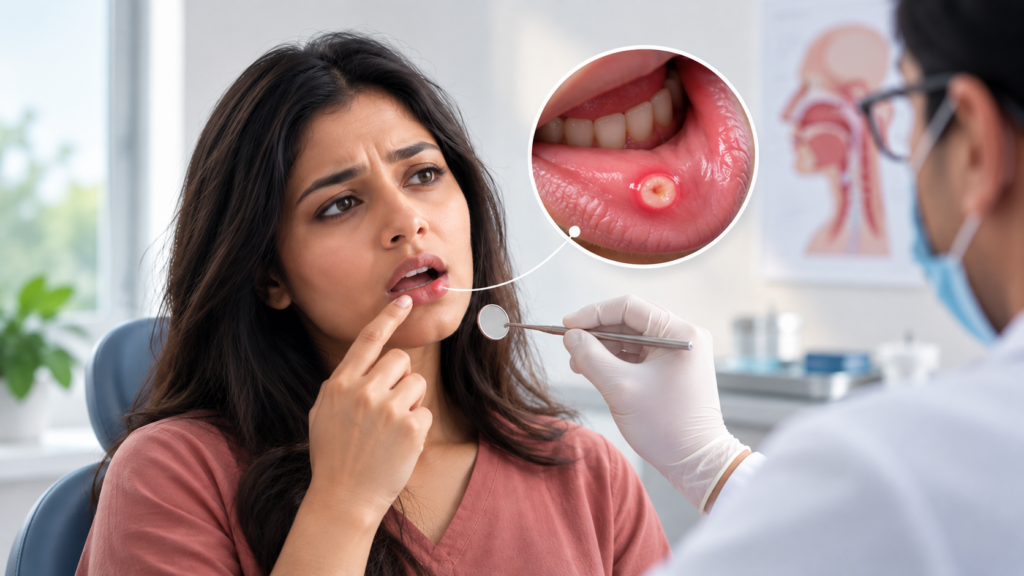
“I have a mouth ulcer that isn’t going away. Could it be oral cancer?”
This is a common concern, especially when a sore in the mouth takes longer than expected to heal. The good news is that most mouth ulcers are not cancer. They can develop because of minor injuries, irritation, stress or other non-serious causes.
However, a sore that does not heal, keeps changing or appears with other unusual symptoms should not be ignored. Knowing what to look for can help you decide when to seek medical advice.
In this guide, we explain the difference between a common mouth ulcer and possible warning signs of oral cancer, including healing time, changes in appearance, other symptoms, risk factors and when you should see a specialist.
Mouth Ulcer vs Oral Cancer: What Is the Difference?
A common mouth ulcer is usually temporary. It may be painful or uncomfortable, gradually become smaller and eventually heal.
Oral cancer can sometimes appear as a sore or ulcer inside the mouth. The important difference is not simply whether you have an ulcer, but how it behaves over time.
A sore that does not heal, becomes larger, changes in appearance or occurs along with other unusual mouth changes deserves professional attention. Other warning signs can include unexplained bleeding, a lump, a hard area, numbness or difficulty chewing or swallowing.
However, having a persistent mouth ulcer does not automatically mean you have oral cancer. Several other conditions can cause similar symptoms.
The only reliable way to determine the cause is through an appropriate clinical examination and, when needed, further testing.
What Does a Common Mouth Ulcer Usually Look and Feel Like?
Most mouth ulcers are caused by relatively minor problems inside the mouth. You may develop one after accidentally biting your cheek or tongue, eating something that causes an injury, or experiencing irritation from a sharp tooth, braces or dentures.
Stress and certain nutritional deficiencies or health conditions may also be associated with mouth ulcers.
A typical mouth ulcer is often painful, particularly when eating or drinking. It should gradually improve rather than continue getting worse.
As it heals, the sore usually becomes smaller and eventually disappears. If an ulcer is clearly improving, there is generally less reason for concern.
However, an ulcer that keeps returning in the same area, does not appear to be healing or changes over time should be examined by a healthcare professional rather than repeatedly treated at home.
What Can an Oral Cancer Ulcer Look Like?
There is no single appearance that can confirm whether a mouth ulcer is cancerous. Oral cancer can present in different ways, and an ulcer may not look the same in every person.
A mouth sore deserves particular attention when it does not heal within 2–3 weeks, continues to grow, changes in appearance or keeps returning in the same area. Unexplained bleeding or an ulcer that feels unusually hard can also be reasons to seek professional evaluation.
Sometimes, the ulcer may occur along with another change in the mouth, such as a lump, thickened area, red or white patch, numbness or persistent discomfort.
These signs do not mean that you have oral cancer. They simply mean that the area should be properly examined. It is not possible to diagnose oral cancer reliably by looking at an ulcer alone.
Mouth Ulcer vs Oral Cancer: Key Differences
A mouth ulcer and an oral cancer lesion can sometimes look similar, which is why it can be difficult to tell the difference at home. One of the most useful clues is how the sore behaves over time.
| Feature | Common Mouth Ulcer | Possible Oral Cancer Warning Sign |
|---|---|---|
| Healing | Usually improves | Does not heal |
| Duration | Usually temporary | Persists beyond 2–3 weeks |
| Size | Often becomes smaller | May grow or change |
| Pain | Often painful | Can sometimes be painless |
| Bleeding | Usually not unexplained | May bleed without an obvious reason |
| Texture | Usually soft or tender | May feel unusually hard |
| Other symptoms | Usually no persistent symptoms | May occur with a lump, patch, numbness or other changes |
These differences can provide useful clues, but they cannot confirm whether an ulcer is cancerous. A persistent or unusual ulcer should be examined by a qualified healthcare professional rather than diagnosed based on appearance alone.
7 Warning Signs That a Mouth Ulcer Needs Attention
Most mouth ulcers improve with time. However, certain changes mean that you should stop waiting and get the area checked.
1. It Lasts Longer Than 2–3 Weeks
A mouth ulcer that has not healed within 2–3 weeks should be professionally evaluated. This does not mean it is cancer, but a persistent sore should not be ignored.
2. It Is Not Getting Better
If the ulcer shows no clear improvement or continues to cause problems, it is worth getting it examined rather than repeatedly treating it yourself.
3. It Keeps Coming Back in the Same Place
Repeated ulcers in exactly the same area may be related to ongoing irritation or another underlying problem and should be assessed if they continue.
4. It Is Getting Larger or Changing
An ulcer that grows, changes in appearance or develops a different texture needs medical attention.
5. It Bleeds Without an Obvious Reason
Unexplained bleeding from a mouth sore is another reason to seek professional evaluation.
6. It Feels Hard or Is Associated With a Lump
An unusually hard area, thickening or lump around an ulcer should be examined, particularly when it does not go away.
7. It Occurs With Other Persistent Mouth Changes
An ulcer accompanied by a red or white patch, numbness, difficulty swallowing or another unusual change should not be ignored.
These warning signs do not mean that you have oral cancer. They simply indicate that the area needs proper evaluation to understand the cause.
Other Oral Cancer Symptoms You Should Not Ignore
A non-healing mouth ulcer is not the only possible warning sign of oral cancer. Other symptoms can include a red or white patch inside the mouth, a lump or thickened area, unexplained bleeding, persistent mouth pain or numbness.
Some people may also experience difficulty chewing or swallowing, difficulty moving the tongue or jaw, persistent sore throat or hoarseness, or unexplained loosening of teeth.
Having one of these symptoms does not mean you have cancer. Many conditions can cause similar changes. The important point is to get persistent or unusual symptoms properly assessed rather than trying to identify the cause yourself.
What Increases the Risk of Oral Cancer?
Tobacco use is one of the most important risk factors for oral cancer. This includes smoking, chewing tobacco and other forms of tobacco use.
Other factors that may increase risk include regular or excessive alcohol consumption, certain types of HPV infection and a previous history of head and neck cancer. Individual health and lifestyle factors may also play a role.
However, having no known risk factors does not completely rule out oral cancer. Risk factors can help doctors understand overall risk, but they cannot determine whether a particular mouth ulcer is cancerous.
When Should You See a Doctor for a Mouth Ulcer?
If a mouth ulcer or unusual change in your mouth has not improved or healed within 2–3 weeks, get it examined.
You should consider seeking medical advice sooner if the ulcer is getting larger, bleeding, repeatedly returning or appearing alongside a lump, red or white patch, numbness, persistent pain or difficulty swallowing.
A dentist, doctor or head and neck cancer specialist can examine the mouth, tongue, gums, throat and neck and decide whether further investigation is needed.
The goal is not to assume that every persistent ulcer is cancer. It is to identify the cause and make sure that a potentially important change is not overlooked.
How Is a Non-Healing Mouth Ulcer Diagnosed?
If a mouth ulcer does not heal or shows unusual changes, a healthcare professional can examine it to understand the possible cause.
Clinical Examination
The doctor will examine the mouth, tongue, gums and throat and may also check the neck for any unusual swelling or lumps.
Medical and Symptom History
You may be asked how long the ulcer has been present, whether it has changed in size or appearance, whether it hurts or bleeds, and whether you have noticed any other symptoms. Your doctor may also ask about relevant lifestyle or medical factors.
Further Tests When Needed
If an area looks concerning during the examination, further tests may be recommended. In some cases, this may include a biopsy, where a small sample of tissue is taken for closer examination.
A biopsy is not needed for every mouth ulcer. The decision depends on what the healthcare professional finds during the evaluation.
Does a Non-Healing Mouth Ulcer Always Mean Oral Cancer?
No.
A persistent mouth ulcer can have causes other than cancer. However, because oral cancer can sometimes present as a non-healing sore, an ulcer that does not improve should be properly examined.
You cannot reliably determine the cause simply by looking at the ulcer. Its appearance, pain level or location alone cannot confirm whether it is cancer.
A professional examination can help identify what may be causing the sore and whether any further tests are necessary. The aim is not to assume the worst, but to make sure an unusual or persistent change is not overlooked.
The Bottom Line
Most mouth ulcers are harmless and eventually heal. The important warning sign is a sore that does not heal, keeps changing or occurs with other persistent symptoms.
Do not try to determine whether an ulcer is cancerous based only on how it looks or feels. If a mouth ulcer persists beyond 2–3 weeks or concerns you, getting it examined can help identify the cause and, when necessary, support early diagnosis and treatment.
Need Expert Evaluation for a Non-Healing Mouth Ulcer?
If you have a mouth ulcer that is not healing, keeps returning or is associated with other unusual changes, consider getting it evaluated by a Oral cancer specialist.
Consult a Head & Neck Cancer Specialist in Gurugram
Call: +91 9217 317742
Frequently Asked Questions About Mouth Ulcer vs Oral Cancer
Can a mouth ulcer be a sign of oral cancer?
Yes, a persistent mouth ulcer can sometimes be a sign of oral cancer. However, most mouth ulcers are not cancer. An ulcer that does not heal within 2–3 weeks, changes, grows or occurs with other unusual symptoms should be professionally evaluated.
How long does a normal mouth ulcer take to heal?
A common mouth ulcer should gradually improve and heal within a reasonable period. If a sore continues beyond 2–3 weeks without improving or keeps returning in the same area, it is better to have it examined rather than continuing to wait.
When should I worry about a mouth ulcer?
You should seek professional advice if an ulcer lasts longer than 2–3 weeks, does not appear to be healing, becomes larger, changes, bleeds without an obvious reason or feels unusually hard. A lump or other persistent mouth changes are also reasons for evaluation.
What does an oral cancer ulcer look like?
There is no single appearance that confirms an ulcer is caused by oral cancer. A concerning sore may be persistent, increase in size, change in appearance, bleed or occur with a lump or other mouth changes. A professional examination is needed for proper assessment.
Can oral cancer be painless?
Yes. Oral cancer does not always cause pain, particularly in its early stages. This is why a persistent or unusual mouth sore should not be ignored simply because it does not hurt. Any sore that does not heal should be evaluated by a qualified professional.
Does every non-healing mouth ulcer need a biopsy?
No. A biopsy is not automatically required for every persistent mouth ulcer. A healthcare professional will first examine the area and consider its appearance, duration, changes and other symptoms. If the area appears concerning, a biopsy or other tests may be recommended.
Can oral cancer occur in people who do not smoke?
Yes. Tobacco is an important risk factor for oral cancer, but it is not the only one. Certain HPV infections, alcohol use, previous head and neck cancer and other individual factors may also contribute to risk. Therefore, the absence of tobacco use does not completely rule out oral cancer.
Which doctor should I see for a mouth ulcer that is not healing?
You can initially consult a dentist or doctor. If the ulcer is persistent or appears concerning, you may be referred to a head and neck cancer specialist for further evaluation. The specialist can assess the mouth and surrounding areas and determine whether additional testing is needed.