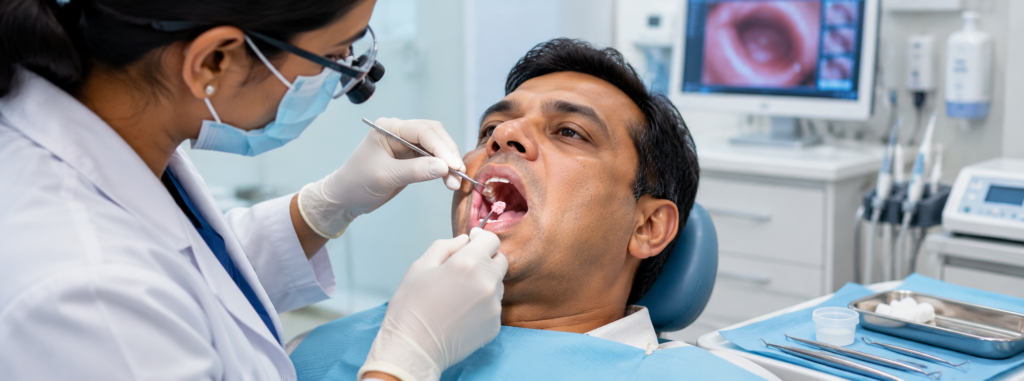
Oral Biopsy: Why It Is Recommended and What to Expect
Being told that you need an oral biopsy can feel worrying. You may immediately wonder whether your doctor suspects cancer. You may also be concerned about pain, bleeding or how long it will take to recover.
An oral biopsy is a test used to find out what is causing an unusual area inside your mouth. It may be recommended for a persistent ulcer, a white or red patch, a lump or another change that needs closer examination.
Being advised to have a biopsy does not mean you have cancer. The purpose is to get a more accurate diagnosis so your doctor can decide whether treatment or further investigation is needed.
Worried About a Mouth Lesion or an Upcoming Biopsy?
If you have been advised to get a mouth lesion examined, you can consult Dr. Biswajyoti Hazarika, a Head & Neck Surgical Oncologist at Peritus Head & Neck Cancer Group.
Call +91 9217 317742 to enquire about a consultation.
What Is an Oral Biopsy?
An oral biopsy is a procedure in which a small sample of tissue is taken from an unusual area inside your mouth. The sample is then examined under a microscope by a pathologist.
The biopsy may be taken from the tongue, gums, inner cheek, lips or another part of the mouth.
The purpose is to identify what is causing the change. It may help distinguish between inflammation, infection, abnormal cell changes and cancer.
Your doctor may recommend a biopsy when an examination alone cannot provide a clear answer.
For example, two white patches may look similar but have different causes. A tissue sample can help establish what is happening beneath the surface.
The procedure does not automatically mean that cancer is suspected. It is a way to obtain more reliable information before deciding what to do next.
Why Is an Oral Biopsy Recommended?
A biopsy is usually recommended when a mouth lesion needs a clearer diagnosis.
Your doctor may suggest one for several reasons.
A White or Red Patch That Does Not Go Away
White and red patches can develop for different reasons. Some are related to irritation or inflammation, while others may involve abnormal changes in the mouth lining.
If a patch persists or looks suspicious, an oral biopsy may help determine its nature.
A Mouth Ulcer That Is Not Healing
Most mouth ulcers heal without special treatment. However, an ulcer that persists, grows or has unusual features may need further investigation.
A biopsy can help identify the cause when the examination does not provide a clear answer.
A Lump or Thickened Area
A lump inside the mouth may develop because of several conditions. Some are harmless, while others require treatment.
If your doctor cannot confidently identify the cause, a biopsy may be recommended.
Suspected Oral Cancer
Sometimes, a biopsy is needed to determine whether abnormal tissue contains cancer cells.
It can help confirm the diagnosis and guide the next steps in care.
The reason for your biopsy depends on your individual findings. Ask your doctor what they have noticed and what they hope the test will clarify.
Does an Oral Biopsy Mean You Have Cancer?
No. An oral biopsy is a diagnostic test, not a cancer diagnosis.
Doctors recommend biopsies for many reasons. These include persistent ulcers, unexplained patches, lumps, inflammatory conditions and other changes inside the mouth.
The test helps identify the cause rather than relying on appearance alone.
If the tissue is non-cancerous, the result may help your doctor recommend appropriate treatment or monitoring. If abnormal or cancerous cells are found, the result helps guide further evaluation and treatment planning.
It is understandable to feel anxious while waiting for a biopsy or its results. However, it is important not to assume the outcome before the report is available.
If your doctor recommends a biopsy, ask why it is needed, what the procedure involves and when you can expect the results.
Having clear answers can make the process less stressful.
What Are the Different Types of Oral Biopsy?
The type of biopsy depends on the size, location and appearance of the area being examined.
Your doctor will explain which approach is appropriate for you.
Incisional Biopsy
An incisional biopsy involves taking a small sample from the affected area.
It may be recommended when the lesion is too large to remove completely at the first procedure or when the doctor needs a diagnosis before deciding on treatment.
The remaining area can then be managed according to the biopsy findings.
Excisional Biopsy
An excisional biopsy involves removing the entire lesion or abnormal area.
This may be suitable for certain small lesions when complete removal is appropriate.
The tissue is then sent to the laboratory for examination.
Which Type Will You Need?
You do not need to decide which biopsy is right for you. Your doctor will consider the lesion’s location, size and suspected cause before recommending an approach.
In some cases, a small sample is enough to establish the diagnosis. In others, complete removal may be appropriate.
The aim is to obtain the information needed to plan the right care.
How Is an Oral Biopsy Performed?
Most oral biopsies can be performed using local anaesthesia. This numbs the area so you remain awake but should not feel pain during the tissue sampling itself.
The exact procedure depends on where the lesion is located and how much tissue needs to be taken.
Before the Procedure
Your doctor will examine the area and explain why the biopsy is recommended.
You will have an opportunity to ask questions about the procedure, possible risks and recovery.
Tell your doctor about any medicines you take, allergies or medical conditions that may affect the procedure. Do not stop prescribed medicines unless your treating clinician advises you to do so.
Also, ask whether you need any special preparation. Many oral biopsies performed under local anaesthesia do not require fasting, but you should follow the instructions given by your own medical team.
During the Biopsy
The doctor first injects local anaesthetic around the area to numb it.
Once the area is numb, a small tissue sample is removed. Depending on the location, the doctor may use stitches to close the wound and help it heal.
The sample is then sent to a laboratory for examination.
The procedure often takes around 15–30 minutes, although the time can vary depending on the type and location of the biopsy.
You may feel pressure or movement during the procedure, but the area should be numb. Tell your doctor if you experience pain so they can assess whether more anaesthetic is needed.
Will It Hurt?
The anaesthetic injection may cause brief discomfort. Once the area is numb, the tissue sampling should not be painful.
After the anaesthetic wears off, you may experience some soreness or swelling. This usually improves over the following few days, although recovery varies depending on the location and size of the biopsy.
Your doctor can explain what to expect in your particular case.
What Happens After an Oral Biopsy?
After the biopsy, the medical team will check the area and make sure any bleeding is controlled before you leave.
You may be able to return home the same day.
It is normal to experience some tenderness once the anaesthetic wears off. Mild swelling or a small amount of blood in your saliva may also occur.
If the biopsy is taken from the tongue, chewing or speaking may feel uncomfortable for a short time.
Your doctor will provide instructions based on the site of the biopsy and whether stitches were used.
What Should You Eat After an Oral Biopsy?
Choose soft foods if chewing is uncomfortable. Avoid very hot food or drinks while your mouth is still numb, as you may accidentally burn yourself.
Follow your doctor’s advice about when to resume your usual diet.
How Should You Care for the Biopsy Site?
Follow the instructions provided by your treating team. Avoid disturbing the wound or biting the area while it is numb.
Your doctor will advise you on brushing, mouth rinsing and keeping the area clean. These instructions may differ depending on where the sample was taken.
If you experience bleeding that does not stop with the recommended pressure, increasing swelling, worsening pain or other symptoms that concern you, contact your medical team promptly.
Seek urgent medical help for heavy or uncontrolled bleeding or difficulty breathing or swallowing.
How Long Does an Oral Biopsy Take to Heal?
The biopsy itself may take only a short time, but the wound needs time to heal.
Many small biopsy sites improve over several days. Soreness may last longer if the sample was taken from an area that moves frequently, such as the tongue.
If stitches are used, they are often dissolvable. Your doctor will tell you whether they need any further attention.
Healing time varies depending on the size and location of the wound, your general health and the type of procedure performed.
Avoid judging the success of the biopsy by how quickly the wound heals. The tissue sample is sent to the laboratory separately, and the result may take longer than the initial recovery.
If the wound becomes increasingly painful or swollen rather than improving, contact your treating team.
When Will You Get Your Oral Biopsy Results?
The sample is examined under a microscope by a pathologist. The report helps your doctor understand what caused the lesion.
The waiting time varies. Some results are available within days, while others may take longer depending on the tests required and the laboratory.
Waiting can be stressful, especially when you are worried about cancer. However, a delay does not automatically mean that something serious has been found.
Your doctor will explain the result and what it means for your care.
The report may show a non-cancerous condition, abnormal cell changes or cancer. The next steps depend on the actual findings.
If the result is unclear or the sample does not provide enough information, your doctor may recommend further tests or another biopsy.
Make sure you know when and how your results will be discussed. If you have not received an update within the timeframe you were given, contact the clinic.
What Happens If the Biopsy Shows Cancer?
If cancer cells are found, your doctor will explain the diagnosis and arrange any additional investigations needed to understand the extent of the disease.
Depending on the findings, these may include imaging tests and other assessments. The information helps the treating team plan an appropriate course of treatment.
Treatment depends on the type, location and stage of the cancer, as well as your overall health.
Some patients may need surgery. Others may require radiation therapy, chemotherapy or a combination of treatments.
Not every patient needs the same approach. Your specialist will explain the options and discuss the likely benefits, risks and next steps.
You can read more about the assessment and management of confirmed disease on Peritus’s oral cancer treatment page.
Remember that being advised to have a biopsy does not mean you have cancer. The purpose of the test is to establish the diagnosis so that decisions can be made on the basis of evidence.
Worried About Your Oral Biopsy?
Being advised to have an oral biopsy can raise many questions. You may be worried about pain, the results or what happens next.
The best way to understand your situation is to discuss the findings with a qualified specialist. They can explain why the biopsy is recommended, what the procedure involves and how the results will guide your care.
At Peritus Head & Neck Cancer Group, patients can seek specialist evaluation for unusual changes affecting the mouth and other areas of the head and neck.
To enquire about a consultation, call +91 9217 317742.