
Nasopharyngeal Cancer Treatment in Gurgaon
Specialized Nasopharyngeal Cancer Treatment by Experienced Head & Neck Cancer Specialists Comprehensive nasopharyngeal cancer care with detailed diagnosis, advanced treatment and individualized planning based on the tumour's location, stage and involvement of nearby structures.
- Experienced Head & Neck Cancer Specialists
- Advanced Nasopharyngeal Cancer Treatment
- Personalized Treatment Planning
- Comprehensive Cancer Care

Comprehensive Nasopharyngeal Cancer Treatment
Nasopharyngeal cancer develops in the nasopharynx, the area behind the nose and above the throat. Because this region is located close to the ears, nasal passages, throat and important nerves and blood vessels, early and accurate assessment is important. Symptoms may include persistent nasal blockage, nosebleeds, hearing problems, a feeling of fullness in the ear, headaches, sore throat or a lump in the neck. Some symptoms can resemble common ear, nose or throat conditions, so persistent or unexplained changes should be evaluated. At Peritus, treatment is determined according to the tumour type, location, stage and involvement of nearby tissues or lymph nodes. Depending on the individual diagnosis, treatment may include radiation therapy, chemotherapy and, in selected situations, surgery or other cancer treatments.
Symptoms of Nasopharyngeal Cancer
Nasopharyngeal cancer can cause symptoms involving the nose, ears, throat or neck. Persistent symptoms, particularly when they occur without a clear explanation, should be assessed by a Head & Neck Cancer Specialist.
- Persistent Nasal Blockage: Ongoing blockage or difficulty breathing through the nose may occur when a tumour affects the nasopharyngeal passage.
- Recurrent Nosebleeds: Unexplained or repeated bleeding from the nose can sometimes be associated with an abnormal growth in the nasopharynx.
- Hearing Problems: A tumour can interfere with the Eustachian tube and may cause reduced hearing or a blocked or full sensation in one ear.
- Ear Fullness or Recurrent Ear Problems: Persistent one-sided ear fullness or fluid-related ear problems, particularly in adults, may require further evaluation.
- Lump in the Neck: Swollen lymph nodes in the neck may appear as a painless or persistent lump and can sometimes be an early presentation of nasopharyngeal cancer.
- Headache or Facial Symptoms: Headaches, facial discomfort or other unusual symptoms may occur when a tumour affects nearby structures, particularly in more advanced disease.

How Is Nasopharyngeal Cancer Diagnosed?
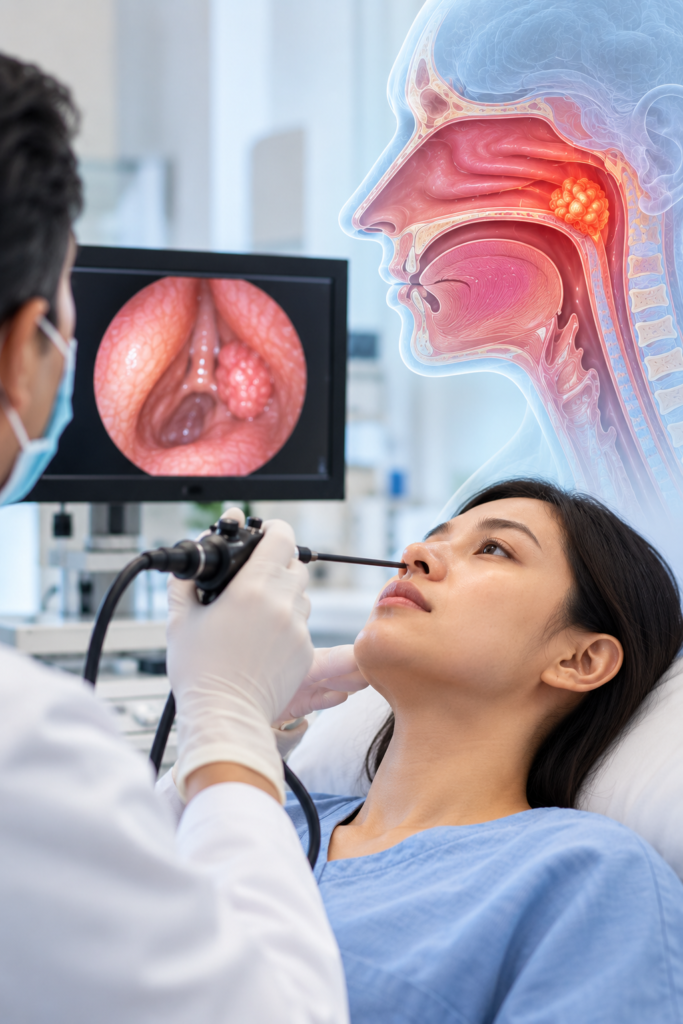
Because the nasopharynx is located deep behind the nose, a detailed examination is needed to identify abnormalities that may not be visible during a routine check-up. Tests are used to confirm the cancer and determine whether it has involved nearby tissues or lymph nodes.
- Nasal & Nasopharyngeal Examination: The specialist examines the nose, nasopharynx, throat and neck for abnormal tissue, swelling or enlarged lymph nodes.
- Nasopharyngoscopy: A thin flexible scope may be passed through the nose to directly examine the nasopharynx and identify suspicious areas that require further investigation.
- Biopsy & Laboratory Testing: A biopsy of the abnormal tissue is performed when required to confirm cancer. Additional laboratory testing of the tumour may help characterize the disease and guide treatment decisions.
- Imaging & Staging: MRI or CT scans can help assess the primary tumour and nearby structures. PET-CT may be used in appropriate cases to evaluate lymph nodes or possible spread to other parts of the body.
Advanced Nasopharyngeal Cancer Treatment Options
Nasopharyngeal cancer is treated according to its stage and the structures involved. Radiation therapy and chemotherapy play an important role in many cases, while other treatments may be considered according to the individual disease.
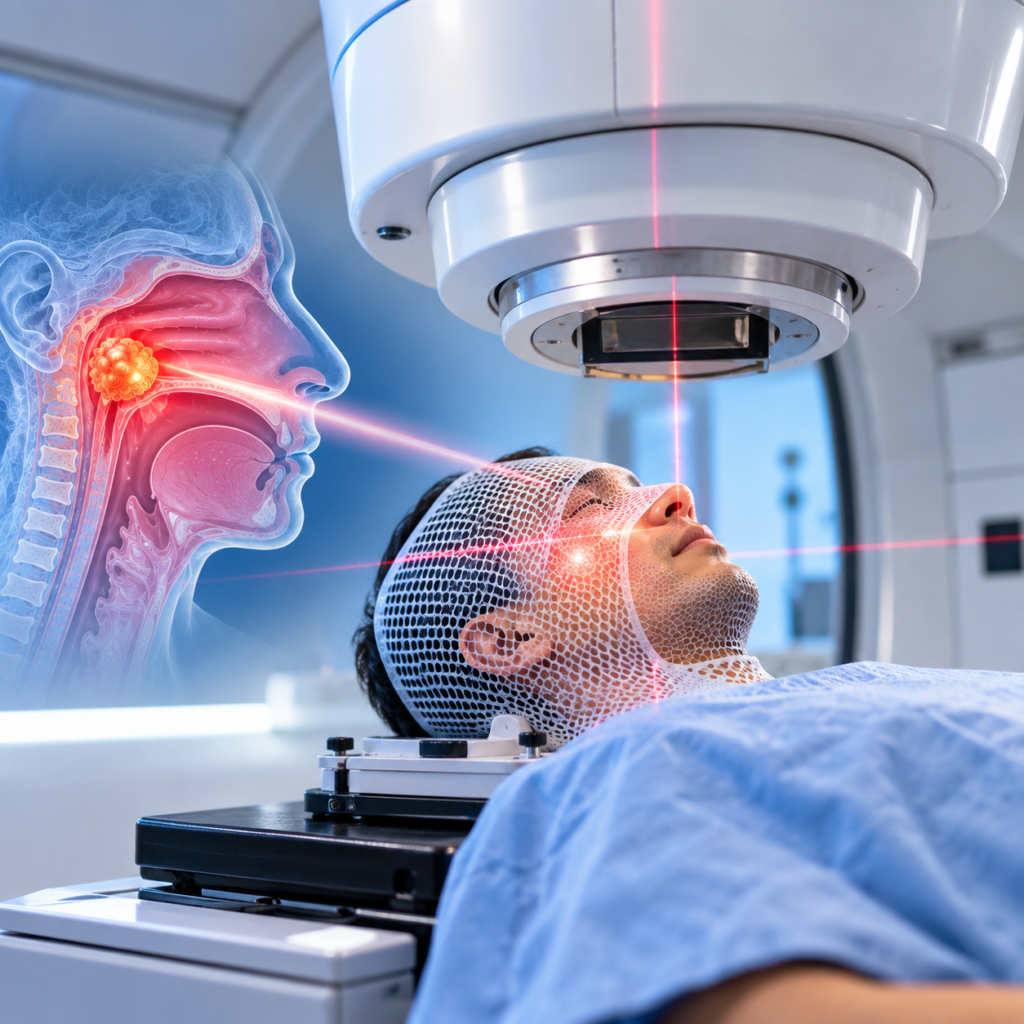
- Radiation Therapy: Radiation therapy is an important treatment for nasopharyngeal cancer and may be used to target the primary tumour and affected lymph nodes.
- Chemotherapy: Chemotherapy may be given alongside radiation or at other stages of treatment depending on the cancer stage and individual treatment plan.
- Chemoradiation: For appropriate patients, chemotherapy and radiation may be combined to treat the primary tumour and regional disease more effectively.
- Surgery for Selected Cases: Surgery is not required for every nasopharyngeal cancer. It may have a role in selected situations, such as certain persistent or recurrent tumours or involved lymph nodes.
- Targeted Therapy & Immunotherapy: For selected advanced or recurrent cancers, targeted medicines or immunotherapy may be considered based on tumour characteristics and the patient's previous treatment.

Your Nasopharyngeal Cancer Treatment Journey
Treatment involves several carefully coordinated stages, from confirming the tumour and assessing its extent to completing therapy and monitoring recovery. Your treatment plan is adapted to the characteristics of your cancer.
- Specialist Consultation: Your symptoms, medical history and examination findings are reviewed, with particular attention to persistent nasal, ear, throat or neck symptoms.
- Diagnosis & Staging: Endoscopic evaluation, biopsy and appropriate imaging are used to establish the diagnosis and determine the extent of the disease.
- Personalized Treatment Planning: The diagnosis and stage are reviewed to determine whether radiation, chemotherapy, chemoradiation or another treatment approach is appropriate.
- Cancer Treatment: Treatment is delivered according to the planned approach, which may involve radiation therapy, chemotherapy or selected additional therapies.
- Recovery & Long-Term Follow-up: Regular follow-up helps assess treatment response, monitor for recurrence and manage any ongoing effects involving hearing, swallowing, nasal function or general recovery.
Why Choose Peritus for Nasopharyngeal Cancer Treatment?
Nasopharyngeal cancer can involve a deep and anatomically complex area close to the ears, throat, skull base and important nerves. Peritus focuses on accurate disease assessment and coordinated treatment planning tailored to the individual diagnosis.
- Head & Neck Cancer Expertise: Specialized care for cancers affecting the nasopharynx and surrounding head and neck structures.
- Detailed Disease Assessment: The treatment plan is based on the tumour's location, stage, lymph node involvement and other relevant diagnostic findings.
- Coordinated Treatment Planning: Radiation, chemotherapy and other treatment approaches can be carefully coordinated according to the patient's diagnosis and stage.
- Advanced Diagnostic Evaluation: Endoscopic examination, biopsy and appropriate imaging help establish the extent of disease before treatment decisions are made.
- Focus on Functional Recovery: Follow-up care considers issues such as hearing, swallowing, nasal function and other treatment-related concerns when applicable.
- Long-Term Cancer Follow-up: Regular surveillance after treatment helps assess response, monitor recovery and identify possible recurrence or late treatment effects.

Visit Our Cancer Care Center
Locate our clinic in Gurgaon and book your consultation with our Head & Neck Cancer Specialist.